

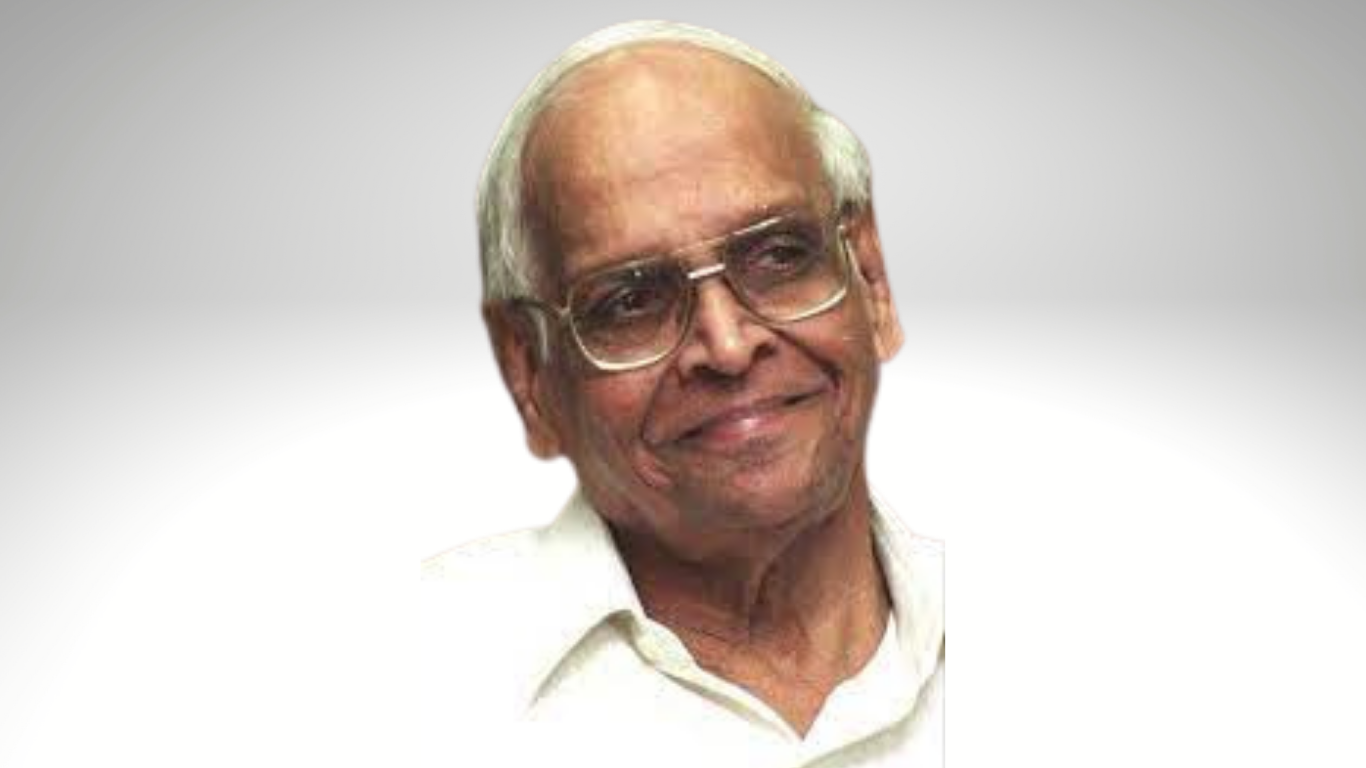
The year 1954 gave out a break to the whole Malayalam Cinema industry when the film Neelakuyil (The Blue Cuckoo) received President’s Silver medal for the best feature film in Malayalam. The film was directed by the first Malayalam twin directors Ramu Karyatt and P.Bhaskaran, who wrote the songs for the movie. The movie, which was based on the famous writer Uroob’s story by the same name, was an epitome of a refreshing storyline and screenplay, efficient direction, and realistic acting.
The Malayalam film industry copied songs from other languages till then. P. Bhaskaran started a revolution through his realistic and simple lyrics that allured the ordinary people of Kerala into film songs. The legacy behind the Malayalam song cannot be written without a detailed column on P. Bhaskaran. Yousuf Ali Kecheri, another songwriter, once said that if Thunjath Ramanujanezhuthachan is the Father of the Malayalam language, then P. Bhaskaran is the Father of Malayalam songs.
To his destiny
Pullaattupadathu Bhaskaran alias Kuttamboor P. Bhaskaran was born on 21st April 1921, as the son of Nandiyelath Padmanabhan Bhaskaran and Ammalu Amma, at Kodungalloor in Thrissur district of Kerala. P.Bhaskaran got his poem published in the School Magazine when he was in the Fourth Form and his prose got published in Mathrubhoomi Childrens’ Weekly. He joined the freedom struggle by participating in Quit India Movement. His father’s passion for literature and music, progressive perspective, and political participation in the then freedom struggle in India was his motivation. He had to undergo arrests and imprisonment during this movement. Meanwhile, he was attracted to the ideologies of the Communist Party. “Uyarum Njan..” was written to commemorate the Punnapra-Vayalar revolt in Kerala that had produced the bloodshed of hundreds of common people. Later ‘Vayalar garjikkunu’ was written by him in the same context. He had written songs for All India Radio (AIR) and later got a job at AIR, Kozhikode as a scriptwriter. His Communist outreaches took him to work with Communist newspapers like Kerala-based ‘Deshabhimani’ and Tamil Nadu-based Jayakerala’.
The then Madras, now Tamil Nadu, gave him an opening in Malayalam songwriting through ‘Apoorvasagodarargal’(Unique Brothers)(1949) where many South Indian languages were included in a song. Even though he had been writing many poems, his lyrics were taken for a complete film song in the movie Chandrika (1950).

Acquaintances he received through such songwriting collaborations paved the way to learn film direction which in 1954 became a turning point in the whole Malayalam movie industry through Neelakkuyil. The song “Kayalarikath Valayerinjappol…” gave the Keralites a cinematic form of the adorable Mappilapatt (Muslim folklore). During this time, P. Bhaskaran published his exquisite poetry Orkkuka vallapozhum (Remember at times).
Later, he started making independent films initially based on Uroob’s scripts like Rarichan Enna Pauran (1956), Nairu pidicha pulivalu (1958), and many more. The former failed but the latter was a box office hit and got remade into other languages. And in total P. Bhaskaran directed 47 films in which he has received many national and state awards for the songs he had written for those films. P. Bhaskaran encouraged prominent Malayalam authors to write scripts to make good movies. Also, he expanded his works through production being a shareholder in ‘Kerala Pictures’.

A true Keralite
Admiring the beauty of the landscape and geography of Kerala, P. Bhaskaran has written Mamalakalkkapurath marathakapattuduth Malayalam ennoru nadund (about the state of Kerala at the side of the Western Ghats) and also, Shyama sundara kera kedhara bhoomi… He has been awarded J.C Daniel Award for his contributions to the Malayalam film industry, besides the Odakuzhal award and Vallathol awards.
Besides being artistic, the veteran writer has served as the Secretary of Kerala Sangeetha Nataka Academy in 1957 and later became its Chairman. He had also worked as the Editor of Deepika – a weekly of Deshabhimani. He became the first Chairman of the Kerala Film Development Corporation after its establishment. He had also served as the founder Chairman of Asianet.
John Paul- the veteran screenwriter, has once recollected how Bhaskaran Sir wrote a 4 line poem “Karayunnu puzha chirikkunnu…” on a piece of Cigarette paper, in a lorry, that later became the theme song not just in a movie Murappennu (1965) but also, a reflection of the pain of separation from dearest ones. He was an eminent writer who has given soul to songs and peace to Keralites’ lives through them.
His last days
Author Ravi Menon recalls Bhaskaran Sir’s last days. He couldn’t recollect anything even his singer S. Janaki but sang songs with her on that day. She was so surprised at this memory of every word of the song. But as they ended singing, he asked, “who wrote these beautiful songs..?”

He was struggling with Alzheimer’s, and when he passed away on 25 February 2007, he had written more than 3000 songs, and also acted in several films. His lyrics are so soothing that it caresses our heads like a mother’s love. Even when P. Bhaskaran himself walks down the lane of oblivion, he still lives through the eternity that he had showered on to his songs.