
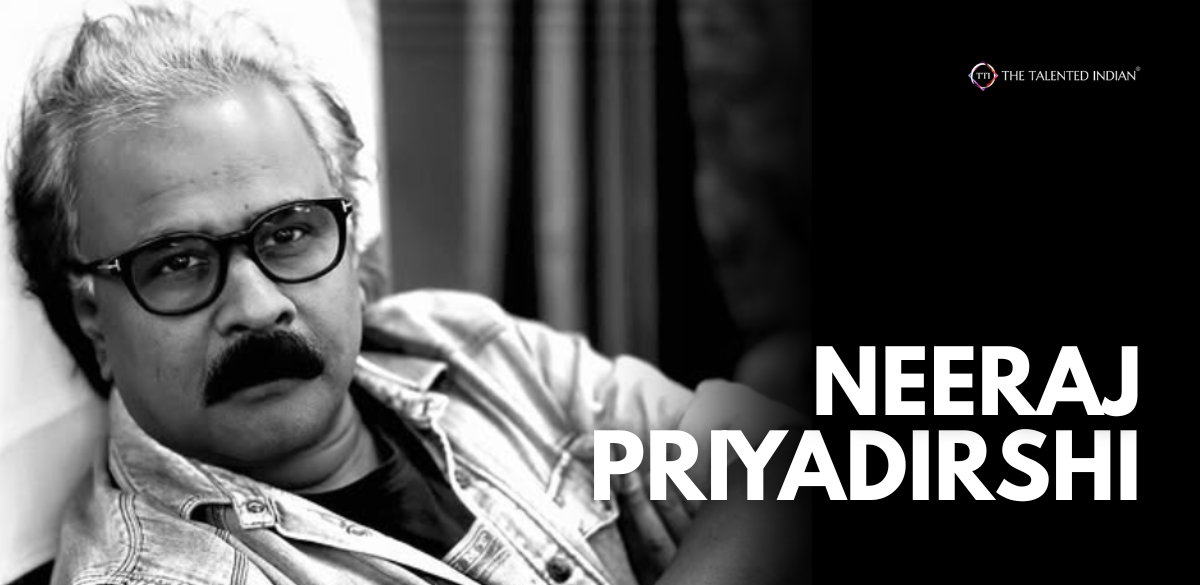
There is a certain kind of photographer who doesn’t just document the world but seems to move through it, quietly, instinctively, always alert to something about to unfold. Neeraj Priyadarshi belongs to that lineage. His career, spanning decades of conflict, culture, and everyday life, is shaped by both where he has been and how he sees.
From a Village in Bihar to the Newsrooms of Mumbai
Priyadarshi’s journey begins in a small village in Bihar, far removed from the high-pressure environments he would later inhabit. At 18, he moved to Mumbai (then Bombay), driven by a singular clarity: he wanted to become a photographer.
His early exposure came from something as simple as a camera owned by his elder brother. But what began as curiosity soon turned into commitment. He joined The Indian Express as a trainee photographer at a young age, eventually rising to become its National Photo Editor, leading teams, shaping visual narratives and defining how stories were seen across the country.
The Image That Changed Everything
Like many photographers, Priyadarshi can trace his artistic awakening to a single image. He recalls encountering the work of a photographer associated with Magnum Photos, the legendary agency co-founded by Henri Cartier-Bresson and Robert Capa. The photograph depicted workers painting the Eiffel Tower, high above the ground, without safety gear, suspended between danger and routine. One worker casually smoked as he balanced himself mid-air. For Priyadarshi, the image wasn’t just visually striking; it was transformative.

It introduced him to what Cartier-Bresson famously called the “decisive moment”, that split second where composition, emotion and meaning converge.
On the Frontlines of History
Priyadarshi’s career has taken him across some of the most volatile and complex regions in the world. Between 2004 and 2008, he made multiple trips to Afghanistan, documenting conflict and everyday life with equal sensitivity.

Despite the violence often associated with the region, he speaks of it with affection, especially Kabul, which he describes as one of his favourite places to photograph. “The people, the landscape,” he reflects, “there’s something deeply human there.”
His work has also taken him through Myanmar, Pakistan and across India, sometimes on unusual assignments, like a road journey from Manipur into Myanmar, documenting cross-border realities.

Bearing Witness: Riots, Floods, and Ethical Dilemmas
One of his earliest major assignments was covering the 1992 Bombay riots. It was here that Priyadarshi confronted the emotional weight of photojournalism. He recalls moments where he couldn’t bring himself to shoot, standing before death and devastation, overwhelmed. “I was crying,” he admits. “I wasn’t taking pictures.”
This tension between documenting and intervening has stayed with him. During the Bihar floods, he chose not to photograph a woman in distress, even though the image could have made front-page news. “There are moments,” he says, “when you draw a line.”

His perspective is clear: photography is not just about access, but responsibility.
The Art of Being There
For Priyadarshi, great photography isn’t accidental, it’s prepared spontaneity. Research plays a crucial role in his process. Whether he is covering a political event, a concert or a remote village, he studies context, people and history.
“A photographer should read more than a reporter,” he says. Literature, politics, psychology, art everything feeds into the image. But beyond preparation lies instinct. He describes it simply: being at the right place at the right time.
One of his widely circulated images, published across dozens of front pages captures this perfectly. It wasn’t staged or planned; it emerged from patience, observation and an ability to anticipate the moment before it happens.
From Riots to Rockstars
While conflict photography forms a significant part of his career, Priyadarshi’s work is remarkably diverse. He has photographed global music icons, Michael Jackson, Coldplay, Shakira, The Rolling Stones as well as Indian classical maestros like Hariprasad Chaurasia.

For him, the approach remains consistent: fall in love with your subject. Whether it’s a war zone or a concert stage, emotional connection shapes the frame.
Influences and Lineage
Priyadarshi places himself within a tradition of photographers who see beyond the obvious. He cites Raghu Rai as a major influence, someone whose work inspired him to pursue photography seriously.
He also draws from international figures and artistic disciplines beyond photography. Painting, music, poetry, all inform his visual language.
Photography in the Age of Social Media
In today’s digital landscape, where images circulate instantly and endlessly, Priyadarshi remains cautious. While social media has democratized visibility, he questions its depth.
For him, a photograph is not just about impact, it’s about endurance. The kind of image that lingers, that asks questions, that reveals something slowly.
Advice to Young Photographers
His advice is both simple and demanding:
- Read widely, beyond photography.
- Understand the world before trying to capture it.
- Stay curious, alert and ethically grounded.
- And most importantly, keep shooting!
“Don’t think too much,” he tells young photographers. “Just keep working.”

The Photographer as Witness
At its core, Priyadarshi’s philosophy rejects the idea of neutrality. Every photograph, he suggests, carries a perspective, whether acknowledged or not. The photographer is not invisible. They are present, choosing, framing, interpreting. And perhaps that is what defines his work: not just the events he has covered, but the consciousness he brings to them.
In a world flooded with images, Neeraj Priyadarshi continues to chase the rare ones, the kind that make you stop, look again and feel something shift.