

India’s freedom struggle is a saga of countless acts of sacrifice. The tribal freedom fighters, valiant men and women who resisted colonial oppression in the forests, hills and far-flung regions of the nation. Some among the bravest warriors of India, are Birsa Munda in Jharkhand, Veer Narayan Singh in Chhattisgarh, Tilka Manjhi in Bihar, Tirot Singh in Meghalaya and Govind Guru in Rajasthan. Tribal leaders united their people in defiant uprisings against British rule, which was often at the cost of their lives. They inspired mass movements rooted in indigenous identity and a burning quest for justice, which has made invaluable contributions to India’s fight for independence.
- Themes and Central Focus
- Honouring Tribal Legends: Voices of Valor and Resistance
- Their legacy for learning and inspiration
- Power and Protest: Tribal Movements at the Core of India’s Independence
- Global History, Tribal Heart—A Revolution in Heritage
- This museum is a landmark for several reasons.
- Contributes to Tourism
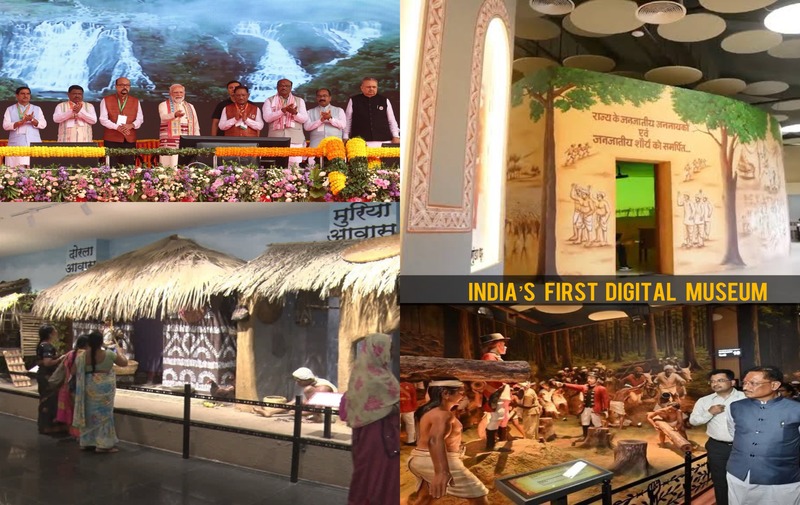
India has inaugurated its first Digital Museum of Tribal Freedom Fighters, to honour these unsung heroes. It is the Shaheed Veer Narayan Singh Memorial and Tribal Freedom Fighters Museum in Nava Raipur, Chhattisgarh. This museum uses state-of-the-art digital technology, including VFX displays, interactive screens, digital projections and QR-coded storytelling. Visitors get mesmerised in the legacy of 14 major tribal revolts and innumerable acts of courage. It features local wood-carved art, thematic galleries and accessibility features for all. The museum stands as a living tribute to tribal resilience, which educates visitors and inspires future generations. The museum preserves the stories of those who shaped the nation’s destiny.
Themes and Central Focus
The museum’s themes and central focus is on the courage, sacrifice, tribal valour, resistance and indomitable spirit of tribal freedom fighters. Its immersive digital narratives chronicle 14 major historic tribal revolts, as well as the tribal -women-led protest in the struggle. A dedicated theme spotlights women’s protest and leadership. The museum further demonstrates the participation of tribal communities in the broader national freedom movement. The exhibits celebrate indigenous culture, tribal customs and emphasize the significance of forest and land in tribal life. Artistic tributes and a memorial area, to honour martyrs and unsung heroes, preserving their stories for future generations.
The museum makes learning engaging and accessible. It is complemented by tools like the “Aadi Shourya” e-book and a museum portal for students and researchers. Altogether, the exhibits are designed to inform visitors about lesser-known heroes and tribal revolts. It promotes a deeper awareness of tribal resistance and its crucial role in India’s freedom struggle.
Honouring Tribal Legends: Voices of Valor and Resistance
The prominent tribal freedom fighters featured in India’s First Digital Museum of Tribal Freedom Fighters (Shaheed Veer Narayan Singh Memorial and Tribal Freedom Fighters Museum, Chhattisgarh) include Shaheed Veer Narayan Singh (Chhattisgarh) as the main focus of the museum. He was the first tribal martyr of Chhattisgarh, who led a rebellion against ‘British grain hoarding’ during a famine. He inspired peasants and Adivasis to resist colonial exploitation. Bhagwan Birsa Munda (Jharkhand), revered for his revolutionary uprising ‘Ulgulan’ against the British in the Chotanagpur region. He fought for tribal land and rights. Tilka Manjhi (Bihar) who led early tribal resistance against the British and was hanged in 1786, is also featured there. Sidhu and Kanhu Murmu (Santhal Pargana, Jharkhand) were leaders of the Santhal Rebellion in 1855–56 against British and zamindari oppression. Jatra Tudu, Chand Bhairav (Santhal leaders) is featured there as they played a vital role in tribal uprisings.
Their legacy for learning and inspiration
Tantya Bhil (Madhya Pradesh) led the Bhil revolt and was known as the ‘Robin Hood’ of India. Tirot Singh (Meghalaya) was a Khasi chief who resisted British encroachment. Govind Guru (Rajasthan/Gujarat) inspired the Bhil community in the Mangarh rebellion against the British. Budhu Bhagat, Gaya Munda (Jharkhand) were the early tribal warriors acknowledged for leading resistance actions. Ganga Narayan Singh (Bengal/Jharkhand) was an instrumental tribal leader in many uprisings. Badal Bhoi (Madhya Pradesh) was a regional leader known for non-violent tribal resistance. Rani Cho-Ris (Chhattisgarh) is featured there as she led women-centred protests and played a significant role in tribal revolts. Thematic galleries, sculptures, interactive technology and digital storytelling celebrate these figures. This makes their legacy available for learning and inspiration, to all who visit.

Power and Protest: Tribal Movements at the Core of India’s Independence
The museum portrays a remarkable collection of tribal revolts especially in Chhattisgarh and central India. This shaped India’s freedom movement. The museum brings to life these revolts, along with their leaders and martyrs. Some of the major tribal uprisings and movements showcased in the museum are the Halba Rebellion (1774–1779, Chhattisgarh). People consider this as the first tribal revolt in India. The Halba community led the revolt against feudal lords and Maratha colonial intrusion. Surguja Rebellion (1792–1905, Chhattisgarh) where tribes of Surguja and Palamu united against British and local rulers. Bhopalpatnam Revolt (1795, Chhattisgarh) in which there was tribal resistance against oppressive colonial and feudal powers. Paralkot Uprising (1824–1825, Chhattisgarh) -Zamindar Gaind Singh and Abujhmadia led tribals, opposing British and Maratha exploitation.
Tarapur Rebellion (1842–1854, Bastar) was an armed resistance by Muria, Madia and Gond tribes in Bakawand tehsil. This was against Bhonsla rulers’ excessive taxes and British policies. Lingagiri/Linga Garh Rebellion (1856–1860) in which Maria and Gond tribes fought brutal campaigns against British oppression from Chintalar hills. Koi Rebellion (1859, Bastar) – Jugga Raju led local tribes who revolted against timber contract exploitation and British economic dominance. Sonakhan Rebellion (1857, Chhattisgarh) – Zamindar Narayan Singh led a revolt against British persecution in the midst of the 1857 rebellion. Resistance by Meria tribes mentioned among the notable revolts. Bhumkal Movement was a significant uprising reflecting tribal unrest and assertion of identity. Jhanda Satyagraha & Jungle Satyagraha – Mahatma Gandhi inspired a non-violent movement that showed tribal involvement in India’s freedom struggle. Tribal women led the Rani Cho-Ris Movement (1878). It was a unique rebellion protesting local rulers and colonial imposition.
Global History, Tribal Heart—A Revolution in Heritage
The museum spreads Indian culture beyond the borders, it goes beyond mere commemoration. It is a showcase of India’s multicultural identity and indigenous traditions. The museum shares the rich tapestry of tribal art, music, clothing and oral heroes with a global audience. It uses AI-powered narration, virtual walkthroughs and multi-language accessibility. Visitors experience India’s tribal culture and history remotely, breaking barriers of distance and language. Local artists’ involvement ensures and depicts tribal customs accurately. This strengthens India’s soft power abroad which promotes cultural tourism.
The museum serves as a model for how digital heritage preservation can democratize history, internationally while uplifting marginalized voices. Scholars, diaspora communities and history enthusiasts in countries like the UK, USA and Australia can access curated digital archives. They could also interact with virtual exhibits and participate in educational programs. The museum’s integration of cutting-edge technology aligns with the Digital India Mission. It sets a precedent for future digital culture initiatives worldwide.
This museum is a landmark for several reasons.
It represents historical innovation by being India’s first fully digital museum. The museum set new standards for the presentation of history. It is through the dedication to tribal leaders. Through its 16 thematic galleries and immersive digital storytelling, the museum plays a crucial role in cultural preservation. The museum safeguards indigenous history, art and oral traditions. These were previously at risk, that people would forget them. As an educational resource, it serves both students and researchers, encouraging a more nuanced understanding of India’s freedom struggle and fostering national unity by promoting awareness of the country’s rich diversity.
Contributes to Tourism
The museum also contributes to tourism development by positioning Nava Raipur as a prominent hub for digital and cultural tourism, which brings economic opportunities and draws international attention to the region. Above all, it stands as a living memorial, immortalizing the sacrifices of icons like Shaheed Veer Narayan Singh, Birsa Munda and many others, thus creating a lasting tribute for generations and formally acknowledging the invaluable contributions of tribal communities to India’s independence. India’s First Digital Museum of Tribal Freedom Fighters is an enduring monument to indigenous valour. It is not a collection of artifacts like we are familiar with of museums. This is a global platform for Indian culture, a catalyst for education and tourism. It could be a revolutionary historical landmark in India and beyond.
Check out our latest article on Shadow Stories: The Soulful Spectacle of Tholapavakoothu

