

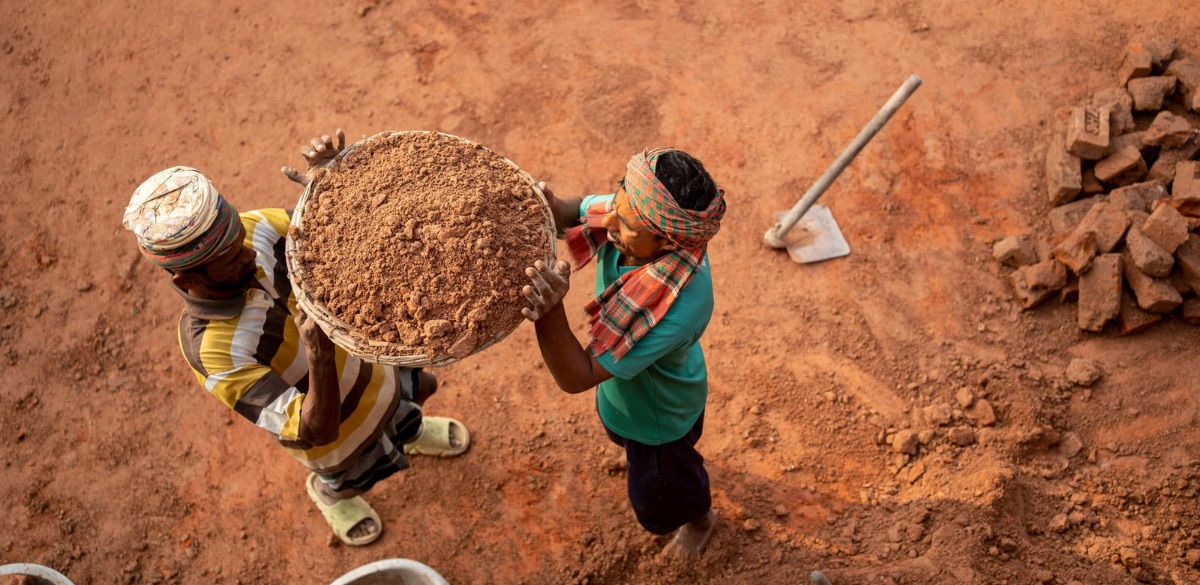
Whenever people honour and celebrated a particular day, it is in reverence to the importance it holds. This is to remember all those people and their efforts for provision of the basic human rights for the humanity. They reshaped our society. The particular day belonged to them that the humanity could successfully restructure the labour laws. These people helped the humanity get the benefits of the 8 hours work a day, along with a weekly holiday. They also enabled job security in the work place whether for a woman or a man.
- Unbearable Hours, Rising Voices, Global Revolt
- Revolt Against Oppressors
- A Historical Fact
- From Haymarket to Chennai: Roots of Labour Day
- Respect Worker’s contributions
- Voices of Labour: Power in Work and Dedication
- Modern Gig Workers and the Fight for Dignity – A Modern Conflict
- Cultural Insight
- Visual/Archival Reference
- Conclusion
Today, if the workers have these rights as an employee, it is because of them. The people did not get these rights easily. Before this, some people struggled to give the entire working class the basic rights, the humanity enjoy today. All the facilities that the humanity have got today from the employers are the results of the efforts and struggles of those people,
Unbearable Hours, Rising Voices, Global Revolt
Earlier in the 1800s, employers made people work for 12, 16 or even 18 hours a day. The workers never raised their voices against this. The workers obeyed and followed the dictates of the capitalist masters and their managers without realizing that it was inhumane. They could never realise that there was another way out or that they didn’t deserve that inhuman treatment. The workers did not have any facilities or even basic necessities for their jobs. There was no job security.
The conditions in which people worked was inhuman and unbearable. Every one needed to compete and earn money. They did not dare to go against all these inhuman treatments. The business owners of that time wanted to make more and more profits. Employers could achieve this only by getting out maximum work from the workers and labourers on minimum wages. If Employers gave any facilities to workers, it would cost the owners and they would make less profits.

Revolt Against Oppressors
The workers of the United States of America raised their voices and revolted against the oppressors, who were the capitalists and owners of the businesses and factories. The revolt against this type of conditions took form and gained momentum overseas. It spread to the Europe and then to France and gradually to the whole world. When the conditions of the workers were hopeless in Chicago, on 1st May, 1886, there was a worker’s strike.
It was in this revolt that they demanded an 8-hour work day, higher wages, some basic facilities and better working conditions. This was in a democracy and not in a monarchy. This made it effective and the idea gained power and momentum. As the United States of America was a democratic country at that time and the workers were in large numbers. Most of the population was of working class. The movement gradually built strength. Many workers lost their lives in the clash.

A Historical Fact
History has recorded a commemoration of sacrifice (Haymarket Martyrs) of the workers fighting for justice for the working classes. Workers gave up their lives at the place known as ‘Haymarket Affairs’.. This attracted the attention of the whole world. The whole world started questioning about the happenings. It raised awareness about the dignity of the workers and labourers all over the world. Workers and labourers alerted themselves that they could demand rights.
In 1889, ‘Second International Organisation’ passed the rule to commemorate the sacrifice of the workers, who lost their lives. Every year on 1st May, the humanity across the globe remembers the sacrifice of these workers. The importance of the Labour Day is to remember the sacrifice and pay homage to all those great pioneers, who thought for the first time that the workers and the labourers are also human beings and like others, they also deserves respectful and safe work places and working environments.
From Haymarket to Chennai: Roots of Labour Day
Labour Day in India has deep roots in Chennai (Madras). It was first celebrated on 1st May, 1923 by Singaravelar Chettiyar. He was a freedom fighter and labour activist. Tamil Nadu later became the first State in the country to declare 1st May of every year a holiday. Then in 1967 and in 1990, international organizations and places recognized it.
It was under the leadership of Singaravelar Chettiyar that for the first time, the workers and labourers raised their red flag. Singaravelar Chettiyar was the chief leader in the Communist Party of India in 1924-25. People regarded him as one of the most influential leaders in this movement. The red flag is significant in ‘Labour Day’. ‘Labour Day’ has great significance as it reminds the humanity that the workers and labourers are the backbone of the economy and society. The entire existence of the humanity is based on the struggles and efforts of the workers and labourers, who are the chief architects of agricultural and industrial productions. The progress of the countries across the globe rests on the struggles and efforts of the workers and labourers. The people realise that no factory, institution or company can function properly without the active participation and cooperation of the workers and employees.

Respect Worker’s contributions
The most important thing is that the employers should take proper care of their workers. This is necessary since employee’s contribution is irreplaceable. Everyone should respect the contributions of these workers in the agricultural and industrial productions and thereby in the growth economy and society. The employers should ensure that they get appropriate wages along with judicious place in the economy and society. The workers should also get equality of all kinds, because they are the base of the economy and society. The strength of an establishment is in the base itself.

Voices of Labour: Power in Work and Dedication
A quote by Indira Gandhi “My grandfather once told me there were two kinds of people those who do the work and those who take the credit. He told me to be in the first group; there was much less competition”. This shows the power of labourers.
The Indian Express quotes “You have the power to change this world if you have the power to work with commitment and dedication”. This proves that the dedication accompanied by hard work is the real power.
Modern Gig Workers and the Fight for Dignity – A Modern Conflict
Even these days, there are some places, where the capitalists, business and factory owners do not provide the workers and labourers with their rightful statuary dues. Many employees suffer from insecurity of jobs. In many places, employers deny workers and labourers statutory wages and health insurance. Society and the country face this collective problem. Leaders must tackle it urgently and humanely to secure industrial peace, boost productivity, and grow the economy.
Now-a-days, the gig workers in the economy, likedelivery riders, app‑based drivers or platform freelancers struggle for recognition under the labour laws. Traditional unions often exclude them. The companies classify them as ‘partners’ rather than their employees. On May Day, the protests increasingly spotlight this conflict. Their demand is for social security, fair wages, facilities and collective bargaining rights.
Cultural Insight
Singaravelar Chettiyar, a freedom fighter and labour activist organized the public meetings. He did this under the banner of the ‘Labour Kisan Party of Hindustan’. This marked India’s entry into the global labour movement. This cultural moment fused the workers’ rights with the independence struggle. Tamil Nadu played a pioneering role. In 1967, Chief Minister C.N. Annadurai declared May 1 a state holiday. In 1990, Prime Minister V.P. Singh made May 1 a Central Government holiday. This was after the request by Durai Vaiko. This shows how Labour Day in India is about the workers’ rights, regional pride and political recognition.
Visual/Archival Reference
One striking archival image is the 1923 Madras Beach Labour Day meeting. Here people raised the banners demanding justice for the workers and labourers, against the colonial rule. Such visuals remind us that May Day in India was not only about the workers and labourers. It was also about human rights, freedom and dignity for the workers and labourers. Another reference is the 2006 Indian Postal Stamp honouring‘M. Singaravelar’. This symbolizes his role in bringing May Day (Labour Day) to India.

Conclusion
Labour Day is not just remembrance, it is also the responsibility to contribute to the achievement of humane working environments, human rights, respect and dignity for each and every worker and labourer not only in the country but also in all the countries of the world. The sacrifices of the workers and labourers in the past gave the humanity the rights we are enjoying now. But the rights remain fragile unless we act upon them continuously. Employers must ensure fair wages, safety, and equality for workers and labourers. Citizens must honour and respect labour as the backbone of the economy and society. The workers should unite to demand justice and equality of all kinds. When each of us does our part, Labour Day becomes fruitful. This transforms memory into progress and reverence into real change.
India codified new labour laws in 2020 and implemented the same in 2026. The authorities debated that shaped the future of work. Four‑day week proposals stirred strong voices. Daily hours may rise, sparking concern. Employers must set minimum wages with fairness. Workers demand dignity, not exploitation. Organizations must consider women’s safety in night shifts. Employers and Organizations must guarantee protection without any compromise.
The question of Provident Fund highlights financial security. Labourers deserve stability, not uncertainty. These reforms test balance between progress and justice. Labour rights must remain the nation’s backbone. Let us all be a part of the solution and raise our voice for the justice for the workers and labourers. Conforming with error would not help the country to progress, therefore let us all strive for a better future.
Check out our latest article “Kathakali’s Painted Faces: Living Epics of Timeless Art” here!