


‘Raat Din Din Raat’ a movie directed by Adeeb Rais, opens with a man seeking help to speak his heart. He feels suffocated by stress and unexpressed frustration. His mind feels heavy and anger colours his smallest reactions. He snaps at little things and cannot enjoy daily life. His inability to cope with constant pressure shows in every gesture. He believes life has treated him with deep unfairness. He lives in confusion, unable to understand his suffering.
The title ‘Raat Din Din Raat’ reflects this endless torment. The phrase suggests repetition, a loop of constant pain. His struggle feels like a vicious cycle without escape. His partner, Priya, lies very ill in a hospital bed. He has accepted full responsibility for her fragile condition. Bills keep piling up and overwhelm his limited income. Daily work feels like a burden he can barely shoulder. He cannot balance medical expenses and focused work.
The Fractures of Care
The caregiver informs him that Priya’s mother will arrive. She plans to complete formalities for shifting Priya to Indore. He hears this news and instantly reacts with frustration. Priya’s mother firmly announces shifting Priya to Indore. She states clearly that this decision is not negotiable. He refuses to accept Priya’s removal from their city. Shifting Priya to Indore would separate the devoted couple. Priya would gain family and friends but lose her partner. For the mother, nineteen months of hospitalization seem endless. She sees that stretch as proof that hope has faded. For the partner, those months still hold fragile hope. He recalls how Priya suffered when her family rejected her. They cut ties because they disapproved of their relationship. Only Priya’s accident softened her family’s rigid stance. His frustration grows as he faces this painful hypocrisy. He reaches a breaking point and then discovers a truth.
The Power of Perspective
The film then highlights how perspectives can diverge sharply. He begins to understand the importance of another’s viewpoint. He sees that perspective can transform hurt into empathy and accepts that everyone carries problems hidden from others. People often assume their sufferings outweigh everyone else’s. He learns that each person fights private battles in silence. This insight gradually changes his entire outlook on life. From that moment, he adopts a different mindset.
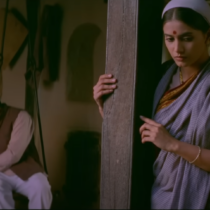
His attitude softens and he observes people with compassion. He notices how everyone bears some heavy, invisible burden. This recognition gives him a new ray of hope. The plot turns as he embraces this altered perspective. He finally agrees to shift Priya to Indore. He reassures himself and others that things will be fine. His inner transformation triggers a shift in the mother. She senses his sincerity and revises her own stance. She agrees to let him visit Priya in Indore and only asks that he come when the father is absent.
The film explores emotional resilience under relentless life pressure. It portrays caregiving as both an act of love and exhaustion. The story examines conflict between romantic love and family authority. It highlights class and financial strain during long-term illness. The narrative emphasises perspective-taking as a path to healing. It shows how empathy can emerge from deep personal suffering. The film also explores hope versus practicality in medical crises. It questions who truly gets to define “home” and “family.” Viewers will experience a raw, honest portrait of caregiver burnout. The film offers nuanced characters rather than clear heroes or villains. It invites audiences to reconsider quick judgments about others’ choices.