

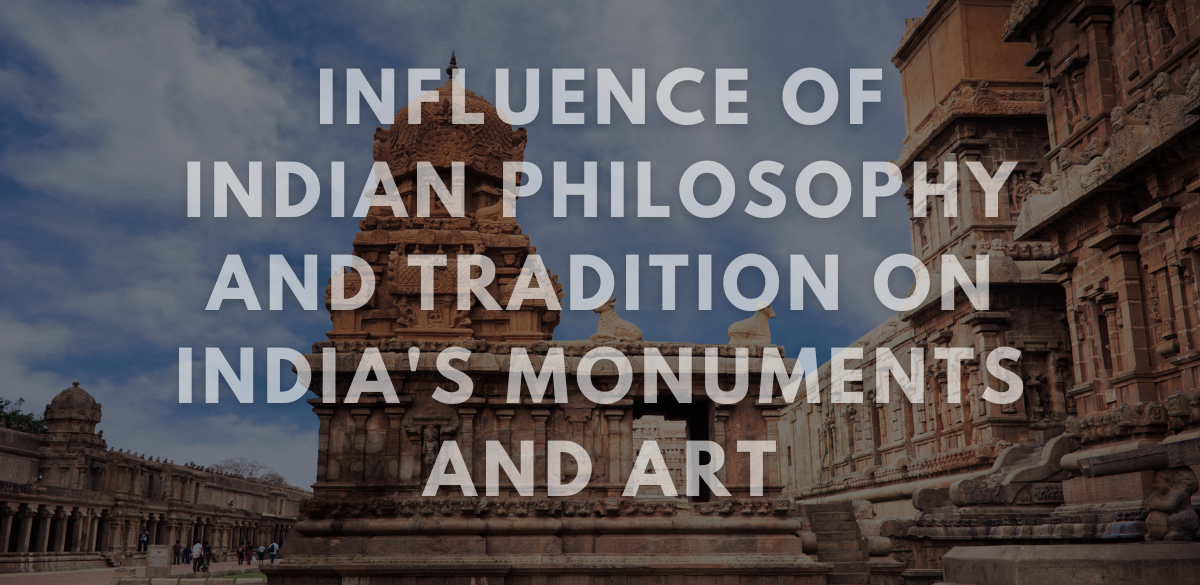
The foundations of India’s cultural and artistic expressions lie in its rich philosophical traditions and practices. Infused with profound spiritual wisdom and centered around concepts like dharma (duty), moksha (liberation) and ahimsa (non-violence), these philosophies have influenced the country’s art and architecture. Monuments and artworks, both ancient and contemporary, demonstrate a deep-seated connection to these ideals. These make Indian culture a timeless and universally respected legacy.
The Foundations of Indian Philosophy and Tradition
Indian philosophy includes various thought systems, including Hinduism, Buddhism, Jainism and later Islamic influences. Indian philosophy explores concepts like the cycle of birth and rebirth, the pursuit of enlightenment and the harmony of the cosmos. These ideas are not just spiritual but also deeply aesthetic. They have motivated artists and architects to create works that serve as physical embodiments of divine ideals and tools for spiritual elevation. These rituals, mythological stories and symbolic elements rooted in Indian traditions form the foundation for these creative endeavors.
Monumental Architecture Inspired by Philosophy
Hindu Influences
Hindu temples are architectural masterpieces that reflect India’s deep philosophical and spiritual traditions. They are often designed based on the ancient Vastu Shastra principles. These guide the creation of structures that symbolize the divine cosmic energy. Iconic temples like the Brihadeshwara in Tamil Nadu and the Sun Temple in Konark embody this symbolic design. They have features like the Shikhara and Garbhagriha representing the devotee’s spiritual ascent from the earthly to the heavenly realm. The carvings and depictions of deities, mythological beings and epic tales on temple walls serve as visual scriptures, allowing devotees to connect with their faith through these artistic expressions.
Buddhist Influences
Buddhist architecture prioritizes simplicity, mindfulness and the pursuit of enlightenment. The Great Stupa of Sanchi, with its circular design, represents the endless cycle of life, death and rebirth. Chaityas and Viharas portray the monastic lifestyle of Buddhist practitioners, embodying values of meditation and asceticism. Furthermore, Buddhist architecture spread beyond India to nations like Sri Lanka, China and Japan, portraying its universal appeal and adaptability.

Jain Influences
Jain temples are known for their complex details and symbolic balance, embodying the principles of non-violence and purity. Structures like the Dilwara Temples in Rajasthan portray the peak of marble craftsmanship. These temples often feature Tirthankara idols in meditative poses, surrounded by motifs that convey spiritual peace. Their distinct design easily combines utility and philosophy, creating peaceful spaces for reflection and devotion.
Indo-Islamic Influences
Indo-Islamic architecture blends influences from Persia, Central Asia and India, creating a unique style. A prime example is the Taj Mahal, a UNESCO World Heritage Site, which combines precise geometric forms with complex floral patterns. Similarly, mosques like the Jama Masjid in Delhi and the Gol Gumbaz in Karnataka portray grand domes, arched entryways and calligraphic inscriptions, portraying the spiritual beliefs of Islam. The use of symmetry, balance and the interplay of light and shadow transforms these structures beyond mere utility, elevating them into artistic expressions of faith.

Indo-Saracenic Architecture
During the colonial period, Indo-Saracenic architecture blended Indian, Islamic and Western styles. Famous examples include the Chhatrapati Shivaji Terminus in Mumbai and the Mysore Palace. This style often used domes, arches, minarets and stained glass, combining local designs with Victorian innovations. It showed a conversation between tradition and modernity, showing India’s ability to adapt to changing times.
Rock-Cut Architecture
The rock-cut architecture portrays ancient India’s engineering skills and artistic talent. Structures like the Ajanta, Ellora and Elephanta Caves were carved directly into mountains, blending utility with complex craftsmanship. These caves served as temples, monasteries and shrines, featuring sculptural reliefs and frescoes that tell religious tales. Rock-cut monuments demonstrate the spiritual dedication of artisans who labored tirelessly to create spaces for worship and contemplation.
Vernacular Architecture
Vernacular architecture in India reflects the regional traditions, materials and environmental conditions of different parts of the country. For instance, the nalukettu houses of Kerala and the havelis of Rajasthan portray sustainable design practices that are deeply rooted in their local contexts. These buildings often incorporate features like courtyards, natural ventilation systems and traditional motifs, capturing the rich cultural diversity of India. The vernacular architecture emphasizes living in harmony with nature and fostering a sense of community, mirroring the core Indian philosophies of interconnectedness and sustainability.
India’s monuments and art bear the imprint of its diverse philosophical and spiritual traditions. From the complex carvings of Hindu temples to the serene simplicity of Buddhist stupas, these creative works serve as physical embodiments of India’s rich cultural heritage. They portray the ability of Indian artists and architects to translate abstract ideas into concrete forms, creating masterpieces that capture and inspire viewers.