

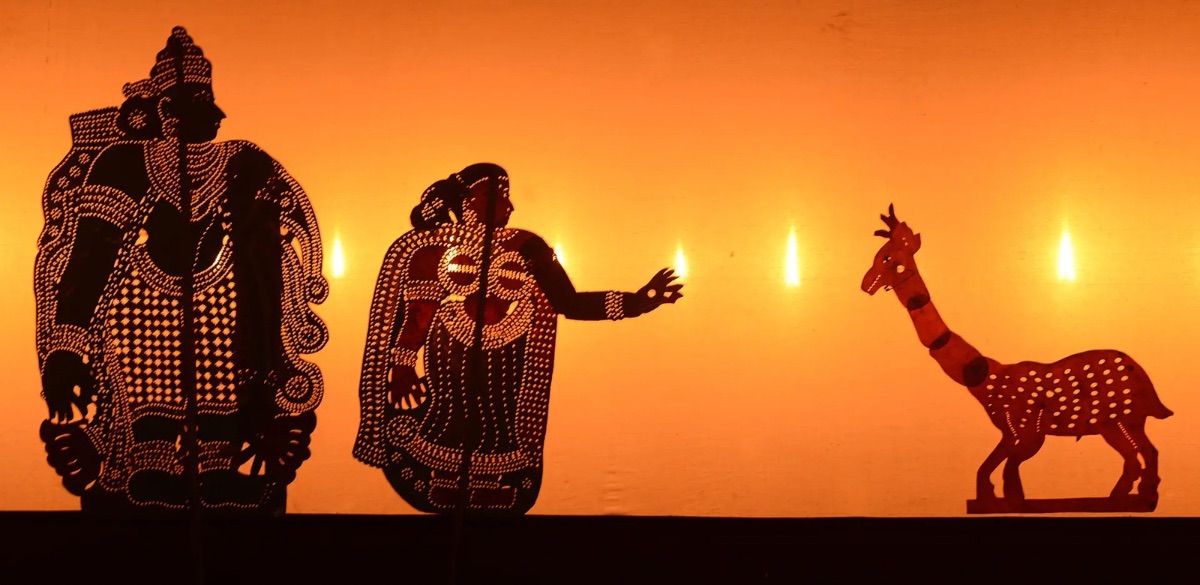
Tholapavakoothu is a ritualistic performance art that uses carved leather puppets to narrate stories from the Ramayana. Among many others, which is especially the tale of Rama’s battle against Ravana. It’s derivation is from the Malayalam words “thol” meaning leather, “pava” meaning puppet and “koothu” meaning play. Tholapavakoothu literally translates to “the play of leather puppets.” They believe it originated over 1,000 years ago and is a spiritual offering with a theatrical experience. It has its roots tracing to Tamil Nadu and later flourished in Kerala’s temple towns. Schools and festivals, adapt the tradition. Digital platforms are portraying it, without losing its spiritual essence.
In the quietness of temple courtyards, as nights fall, a flickering oil lamp casts its golden glow on a screen. The shadows then begin to dance, which is Tholapavakoothu, the ancient shadow puppet theatre of Kerala. It is where leather figurines come alive to retell epics, evoke devotion and stir the soul.
Tholapavakoothu, is a form of entertaining art that is a vibrant spiritual ritual. It blends devotion, storytelling and craftsmanship into one enthralling art. This traditional art has its roots deep in the culture of southern India. It transforms simple leather puppets into instruments of divine expression. The speciality is that shadows tell the stories of gods and mortals. It connects audiences across centuries through imagination and faith.

Sacred Shadows
This art form later flourished in the temples of Palakkad, Thrissur and nearby districts of Kerala. In towns like Koonathara, generations pass down their skills. The primary performance is in honour of Goddess Bhadrakali. The performances are spectacles, that serve as offerings of devotion, narrating episodes from the Kamba Ramayanam (the Tamil version of the Ramayana). It is to appease the goddess and celebrate the triumph of good over evil. Tholapavakoothu is an act of faith, a communion between light and shadow, humanity and the divine. It is an echo and a reminder from the past. The message conveyed is, that even in the age of digital screens; the most powerful stories still live on. They are alive in the glow of a simple lamp and the devotion of those who keep them alive. They explore themes of morality, dharma, and social reflection and address contemporary issues to maintain relevance.

Crafted, Cured and Performed
Traditionally, Tholapavakoothu performances take place in specially constructed stages called koothumadams, situated alongside temples. They hold the shows during the annual temple festivals between January and May, which lasts for 7, 14, 21, or even 41 nights, during the Bharani festival. Depending on the temple’s custom, each night unfolds a chapter of the Ramayana. As darkness settles, the flicker of oil lamps behind a white curtain makes the puppets come alive. They are all beautifully crafted from cured deer skin and coloured with natural pigments. They are intricately cut to allow light to pass through. This casts magical silhouettes that dance to the rhythm of drums, cymbals and chants.
The performers are known as Pulavars. They undergo rigorous training in both the art of puppetry and the verses of the Ramayana. The narration, singing, and manipulation of puppets require immense coordination. This skill turns the entire performance into a symphony of sight, sound, and devotion. Tholapavakoothu often reflects the society it originates from. It addresses themes of morality, power, faith, and the eternal struggle between dharma and adharma. Its themes have expanded in recent years.

Where Shadows Speak in a Changing World
Tholapavakoothu endures because it is a sacred bridge between the divine and the earthly. The performance was traditionally in Bhagavathy temples. They believe that the goddess herself watches the performance. The puppeteers are artists as well as keepers of cosmic storytelling. Tholapavakoothu reminds us of the power of shadows, silence and slow revelation. It preserves oral traditions, fosters community participation, and offers a meditative rhythm that modernity often forgets. Despite facing challenges from changing entertainment preferences and urbanization, Tholapavakoothu continues to endure as a living cultural heritage. Many dedicated artists and institutions are now working to revive and document the craft, incorporating it into educational and artistic dialogues across India and abroad. Its fusion of art, spirituality, and philosophy offers a rare portal into the collective consciousness of Kerala’s people a reminder that storytelling, when born from devotion, transcends time itself.

Adapted and Evolved as a Temple Ritual.
It is now performed in schools, cultural festivals, and even on digital platforms. It proves that tradition can evolve without losing its soul. Tholapavakoothu lives today in the hands of master puppeteers like K.K. Ramachandra Pulavar and in temple towns like Koonathara. The puppets made from deer skin or goat hide are stored with reverence and the stage, called koothumadam, is treated as a sanctum.
Tholapavakoothu is performed skillfully, accompanied by percussion instruments like chenda and maddalam. The performance blends movement, voice and rhythm into a hypnotic narrative. Each puppet is pierced and jointed to allow expressive gestures and the choreography is precise requiring years of training and spiritual discipline. The puppeteer becomes a vessel, channelling myth into motion.
To witness Tholapavakoothu is to enter a sacred conversation between light and shadow, past and present, human and divine. It is a reminder that stories need not be loud to be powerful. Heritage lives in monuments, in the flicker of a lamp, the rustle of leather and the hush of an audience leaning into the dark. Let us honour this art as a relic, and as a living ritual. Let the shadows speak, and may we always listen.

Some amazing artists practicing this art to keep the legacy alive are: Rajeev Pulavar, Sajeesh Pulavar and Ramachandra Pulavar
Check out our latest article on Echoes in Bronze: The Living Legacy of Dhokra Metal Casting

