

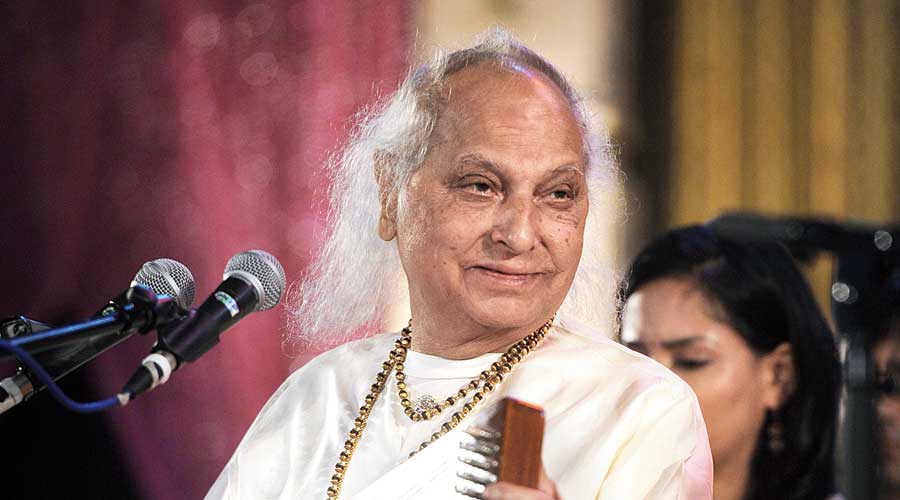
There is music everywhere in this universe. Using frequencies, pitch and rhythm to invoke feelings is perhaps the most powerful thing in humankind. Every culture has over time, developed its own kind of music. They travelled through history to touch, heal and unite everybody. And Hindustani Classical Music is a pioneer of that power. It incorporates instruments, scales and intonations that are absolutely unique. And it roots itself in a deep sense of spirituality and science. It is our gift to the world.
Pandit Jasraj gifted the world with the most natural instrument: Voice. He was born in Haryana to a fourth-generation musical family. Destiny had great plans for him. He soon went on to study under gurus of the Mewati Gharana of Hindustani classical music. In matters of spirituality, Guru Maharaja Jaiwant Singh guided him.
And his musical style adapted to the flexibilities of the modern age while retaining the sonorousness of the old. From semi-classical to Agra Gharana to film, the late Pandit was a true servant of the craft. He is also credited to have created a new form of Jugalbandi in classical music. The emotional quality and sensitivity of Pandit Jasraj’s voice made everything he touched transcendent.
In a career spanning more than seventy years, he left an indelible mark in the fabric of Indian music. In 2000 he was bestowed the Padma Vibhushan by the Government of India. It is the second-highest honour for Indian Civilians. As the charm of classical music is fading in favour of newer forms of music, remembering such an icon serves as a fantastic introduction to those who want to discover the art.