
Dance
Unravelling The Artistry Of Mohiniyattam With Dr. Rekha Raju
As she travels down memory lane, Mohiniyattam dancer Dr Rekha Raju joins us in unravelling the nuances of the classical dance tradition.
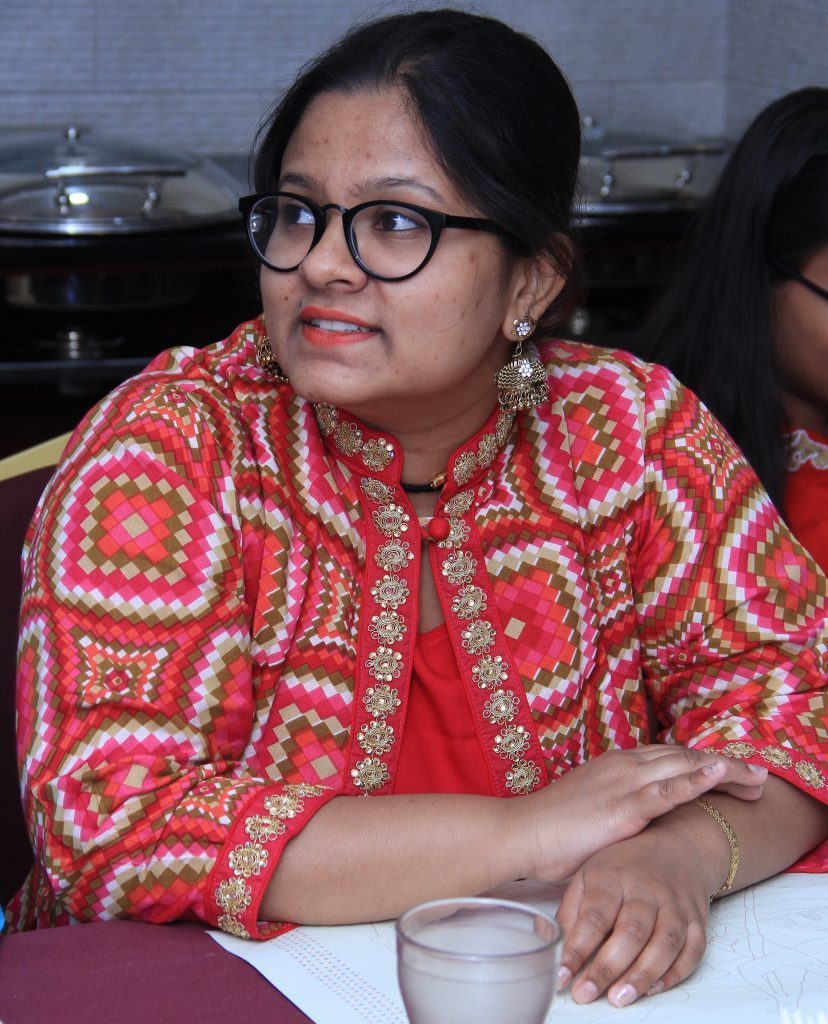

While the imperative classical framework of Mohiniyattam imbues her dance routines with a rich context for the spectators, the steady stream of enthusiasm and excitement for dance anchors an ever-blossoming love for Mohiniyattam in her heart. Setting an impressive example of a Mohiniyattam practitioner, Dr. Rekha Raju impeccably integrates a deep understanding of dance and creative brilliance in her onstage performances.
Her early life
From early on, she showed an inclination for dance. Born in Palakkad, she later moved to Bangalore. Growing up as an only child, her parents have been the constant support system. One of her earliest memories is her mother accompanying her for dance lessons. She started dancing at the tender age of three under the tutelage of the late Padmini Ramachandra. Her teacher was a taskmaster who rigorously supervised the dance routines and simultaneously supported the zeal of the students to learn. In the dance classes, her teacher consistently guided her into perfecting her dance moves. At four, she performed on the stage for the first time. Looking back on that moment, she realises that her early training period laid the foundation of her journey as a dancer.
A Brief Pause
When she was a child, the business run by her father suffered a loss. Everything abruptly came to a standstill. From living an affluent life, she moved to a clustered one-room flat. For the following three years, she had to discontinue her dance lessons. For her, there was no greater agony than skipping the dance lessons. She missed dancing. She missed the stage. More so, she missed the tingles of trying out new costumes before every performance. She was too young to register the turn of events, yet she backed off and cloistered herself into a shell. In time, her family gradually emerged out of the low phase. When things started getting better, she resumed her dance lessons.
Her initiation into Mohiniyattam
In the beginning, she undertook training in Bharatnatyam. She hardly anticipated that the following years would witness Mohiniyattam as the most definitive dimension of her life. At thirteen, she began her training period in Mohiniyattam under Smt. Usha Datar. Her guru shaped her understanding of the dance form- its rhythm, continuity, emotional undertone and the profusion of life. She worked through every tiny detail as she polished her artistry. Her yen for dance augmented her yearning to study music and mridangam. With the resounding presence of dance, she grew up enjoying and loving everything about the performing art and developed a keen interest to share the learning that she had garnered so far. And at sixteen, she started her Dance Academy.
Alongside running the Academy, she was also a diligent school student. After her school days, she took up Chartered Accountancy but soon realised that it was hard to manage the dance academy and concentrate on the coursework. Subsequently, she enrolled for a postgraduate degree in performing art and later pursued a PhD in fine arts from Heidelberg University, Germany. She is also a holder of a postgraduate degree in Bharatnatyam and a rank holder of the Vidwath.
A lifelong learner, she continues to practise under Kalamandalam Sugandhi. With her guru, she experiences a constructive two-way interaction that leads to a unique choreographic symbiosis that brings out the brilliance of her creativity. The guidance and blessings of her guru, she admits, has boosted her confidence as an artist.
The concept of Mohiniyattam
Unlike other classical dance forms of Kerala, the legacy of Mohiniyattam has left behind few records and hard facts. As the history of Mohiniyatam is not prolific, it is hard to corroborate the exact origin of the dance form. Earlier, Kerala Kalamandalam trained its pupils in Bharatnatyam, along with a handful of Mohiniyatam padams. In recent years, more systematic research has been undertaken to study the evolution of Mohiniyattam in the course of history.
Replete with grace, the dance routines involve visible circular bodily movement and a sequence of subtle foot movements. For the audience, the dance showcase might seem like an effortless performance. However, it takes years to train the body into perfecting the vocabulary of postures and footwork that constitute the dance form. Dressed in an off-white sari set to golden laced brocade and adorned with gold plated ornaments, a Mohiniyattam dancer smiles and gracefully moves as she performs feats of strength and agility to the rhythm of Carnatic or Sopanam music.
During the performance, the eye movements of the dancers complement their delicate hand gestures. The fundamental dance style has stood the test of time and remained true to its traditional roots. Despite the limited external influence, the dance form has witnessed the significant inclusion of non-traditional storytelling elements in the repertoire-Guru Bharati Shivaji adopted the narrative of Tchaikovsky’s Swan Lake into Mohiniyattam. Moreover, Kathakali padams, the retelling of narratives as diverse as that of Shakuntala from the Mahabharat and South Indian Goddess Attakal Bhagavati, have leased a new life into Mohiniyatam. Experimenting in a similar vein, Dr Rekha Raju has also incorporated Meera bhajans in her performance.
Artistry is more important than the artist.
For Dr. Rekha Raju, dance is not merely her passion or profession but an integral and inevitable part of her life. Gaining confidence and courage through dance, she affirms that life is about making the best of today by living in the moment. In addition, she also shares that artistry takes precedence over the artist. Over the years, she has not only collaborated with several artists but adapted diverse stylistics into her repertoire. Every collaboration offered an opportunity to evolve as an artist and drew her closer to the roving conversations in league with the growing diversity in all the segments of Indian art forms.
Following the footsteps of luminaries of the dance world, Dr Rekha Raju is a leading exponent of Mohiniyattam and Bharatanatyam. She also conducts training sessions for around 400 students at the Bangalore-based Academy, NrithyaDhama Temple of Fine Arts. As the sparks of new possibilities spread across the skyscape of Indian culture, Dr Rekha Raju promotes the classical dance form through her impressive stage performances and shares her knowledge with a larger audience of art enthusiasts.
‘Artistry is more important than the artist‘
Dr. Rekha Raju
At times, we swiftly race past others, while at another time, we lag. Here, Dr Rekha Raju shares 5 point success mantra that reminds us life is a marathon and not a sprint, and ultimately, everyone is a winner.
5 point success mantra
- Follow your heart.
- Respect your elders and gurus.
- Never disrespect anyone.
- Appreciate and acknowledge others for their contribution.
- Stay connected to what you do.


Dance
Male Indian Classical Dancers: Time To Break The Stigma
Putting an end to the ridicule & humiliation here is our list of male Indian classical dancers who are ready to break the stigma around them.


Classical dance is always associated with femininity and women. Whenever male dancers get on stage to do their classical pieces they are ridiculed to no end. Putting an end to this ridicule and humiliation here is our list of male Indian classical dancers who are ready to break the stigma around male Indian classical dancers and show the world how they too can be graceful and still be a man.
Kathak Rockers by Kumar Sharma
Combining yin and yang energy and exuding elegance with each step, Kumar Sharma’s performance is bound to leave you in awe. The simple costume helps the viewers to focus more on his expressions and mudras. Never missing a beat, Kumar Sharma’s YouTube page is a must-view page for any Kathak lovers. This male Indian classical dancer breaks the stigma against male classical dancers by not shying away from letting himself shine on stage.
Ardhanarishvara Ashtakam by Vinay Tiwari
Vinay Tiwari perfectly executed a Bharatnatyam number that relies heavily on slow movements. Broadcasted on DD Bharati this dance captured the attention of millions because of Tiwari’s perfectly timed expressions. The costumes and the makeup add a layer of drama to the performance. This male Indian classical dancer breaks the stigma against male classical dancers by not being afraid to slow down and take his time to highlight each move at a time rather than rushing through it.
Ami Je Tomar by Rohit Gijare
Who said Manjulika can be the only one to rock a pair of ghungroos and sway to “Ami Je Tomar”? Many female dancers recreated this iconic dance number from the film Bhool Bhooliya so it was about time a male Indian classical dancer gave his take on the same. And Rohit Gijare does exactly that. Never missing a beat or an expression he manages to keep the viewer’s attention till the last minute. This male Indian classical dancer breaks the stigma against male classical dancers by not being afraid to give his take on the classical Bollywood number.
Bharatnatyam Jathi by Ananda Natanam
A cheerful classical Bharatnatyam performance is all you need on a gloomy day to lift your spirits. And Ananda Natanam delivers exactly that. The bubbly steps accompanied by his cute smile are bound to make even non-dancers sway with joy. The costume is kept simple to ensure the audience can focus on the dancer’s movements and relish the pure joy that Natanam exudes with each step. This male Indian classical dancer breaks the stigma against male classical dancers by truly enjoying his art form.
Tryambakam by Sutra Foundation
The Tryambakam, (Odissi) is an invocatory homage to Siva, the triple-eyed Lord, Nourisher and Liberator of souls from the bondage of pull of opposites. This masterpiece by the Sutra Foundation brings to light the pure joy of dancing that was experienced by the Lord of Dance, Shiva who is often depicted as half man and half woman. The dancers beautifully capture the Lord’s ever-famous Tandav dance which is bound to energise any wandering soul with its perfect rhythmic movements and passion. These male Indian classical dancers break the stigma against male classical dancers by invoking the divine and transcending societal gender norms with their performance.
Do check out these dancers to truly appreciate the essence of their performance.
Confluentia of Talent
Footprints of Expression: A Dance Compilation
Exploring Elegance through Four Semi-Classical Dance Performances : Through the Graceful Blend of Tradition and Innovation


Enter into a world of dance, where tradition meets innovation, semi-classical and classical performances are always the beacon of unique niche. A blend of grace and vivacity of contemporary expressions, these performances captivate audiences with their seamless moves and styles. Let us take a journey through the graceful blend of tradition and innovation.
Tere Naina by Dance Choreography :
Tere Naina Choreography unfolds on stage like a delicate poem, each movement a brushstroke on the canvas of emotion. With her impeccable footwork and expressive gestures, Patel effortlessly navigates the realms of love and vivacity. The performance is set to the beautiful song of “Tere Naina” from My Name Is Khan, fused with the traditional moves by our artist which has the audience grooving long after the performance is over.
Gulabi Sharara
Gulabi Sharara is a vibrant performance of music and movement, blending traditional moves with a contemporary flair. The peppy number adds to the rhythmic precision of the footwork to the fluidity of his gestures. The mastery of the craft was evident throughout the performance. With each sequence, they have transported the audience on a journey through time and tradition, merging it with contemporary magic.
Ranjan Gawala Mahaganpati – Dance cover
Ranjan Gawala Mahaganpati – Dance cover, challenged traditional boundaries, offering a fresh perspective on classical dance. Through innovative choreography and evocative storytelling, perspective on classical dance. She breathes life into old classical dances, infusing them with modern relevance. Her seamless integration of traditional moves and contemporary elements sparked conversations and ignited imaginations reminding us that art knows no bounds.
Apsara Ali remix dance choreography – Poonam and Priyanka Dance
Apsara Ali remix dance choreography by Poonam and Priyanka was a celebration of joy, unity and the universal language of dance. Through synchronized movements and shared expressions Poonam and Priyanka brought transition and fusion in harmony. The dynamic performance captivated audiences and left us uplifted and groovy.
After The Curtain Call
Innovation thrives alongside tradition, creating a rich tapestry of expression and creativity. The performances showcased the boundless talent and passion of their creators, leaving an indelible impression on all those who witnessed them. As we applaud the artists for their dedication and vision, let us continue to support and celebrate the transformative power of dance in all its forms.
Dance
Phenomenal Performances by Young Semi Classical Dancers
Wondering what a blend of modern and classical dance would look like? Here’s presenting some phenomenal semi classical dance performances


Dance is the voice of the soul and the language of the heart. Be it modern or classical, dance has always intrigued a curiosity and fascination for people. In the GenZ era with new trends popping up daily, semi-classical dance is something that carved its niche way beyond time. Here’s presenting some amazing dancers with a passion to mix and match to create wonders. Watching them you are sure to shout ‘Taal se Taal Mila’ to your buddy.
Susmita Chakraborthy
Born with her left limb shorter than the right one, Susmita Chakraborthy is changing mindsets with her determination and will power. She is a dancer and choreographer who aces every move with perfection with her prosthetic leg. The grace she depicts in her recent performance is beyond words. Performing a semi classical solo on the soulful song ‘Ishq Karu’ from the movie ‘Sita Raman’, Susmita puts forth an epitome of elegance. Her flawless movements and synchronization are what makes her a perfect dancer. Surely, Susmita can leave Sita and Ram wondering about the unexplored beauty of the song her performance discovered. Find her on Instagram.
Richa Tiwari
Hailing from Lucknow, the city that personifies ‘nazakat’, Richa Tiwari is a choreographer with a style of her own. Being a semi-classical dancer, Richa loves to present a blend of modern and classical forms like Bharatnatyam and Kathak. Her performance on the gem song ‘Ek dil hai ek jaan hai’ by Shivam Pathak from the 2018 movie Padmaavat is worth an applause. The smoothness in her moves puts up a perfect show of magnificence. Richa justified her choice of choreographing her dance on the song from the Ranvir Singh and Deepika Paducone starrer. Follow Richa’s Beats and Taal here.
Shivani Sharma
Shivani is a Delhi based dancer and choreographer whose soul loves to groove on her favourite music. Recently, Shivani chose Coke Studio Season 9’s hit ‘Afreen Afreen’ to give her soul the perfect kind of satiation it needed. She performed a semi classical dance on the Rahat Fateh Ali Khan and Momina Mustehsan song. Her moves brimmed with charm and presented an unparalleled show of adroitness. This performance by Shivani must have surely pleased Nataraja – the Lord of Dance. Come on y’all and dance with Shivi.
Mehek Tejwani
A dancer and choreographer, Mehek Tejwani loves to perform semi-classical dance. Recently, she choreographed and performed on the song ‘Mast Magan’ from the 2014 film 2 States. Along with her fellow dance enthusiasts, Vaishnavi Kale and Sneha Gujar, Mehek took it on herself to put forth a blend of modern and classical dance. Their movements were poise and elegant. Mehek with her team added a silver thread to the already profound song by Arijit Singh and Chinmayi Sripada. You are sure to fall head over heels for this performance.
Anwesha Bhatia
The teen sensation, Anwesha Bhatia is a renowned contestant of Super Dancer Chapter 3, a reality show that aired in 2018 on Sony Entertainment Television. Anwesha recently presented a semi-classical dance on the Marathi treasured song ‘Apsara Aali’ from the album ‘Natarang’ by Ajay Atul and Bela Shende. Her precise and smooth movements are way beyond her age. Her eyes express her confidence and make her stand apart from the crowd. Anwesha is a spectacular dancer with a dynamic personality. She will amaze you with her passion and skill.
Dance
Kathak Musings With The 75-year-old Dr. Rajkumar Ketkar Ji
Dr. Rajkumar Ketkar Ji, the senior most disciple of Pandit Natraj Gopi Krishna Ji, shares his journey with the classical dance of Kathak.


The classical dance form of Kathak is an ancient art form, dating back to the 4th century BC. It reclines on the timelessness of its poise, gratuity to storytelling, discipline and the marvel of music. If Indian culture and its heritage resembles a complex and intricate tapestry, perhaps Kathak, in it, is the dominant streak of the scarlet thread which runs around with its blooming aura – that is how significant Kathak has been, both to the people and the country’s civilisation. Dr. Rajkumar Ketkar ji, the 75-year-old Kathak dancer and teacher, has given 60 years of his life to Kathak. In an exclusive interview with Dr. Ketkar Ji, we sat and listened to his musings on this immersive art form, which has extended itself potentially from its ancient origin to the dynamic contemporary period.
The Guru-Shishya Parampara: The Beginnings of Dr. Rajkumar Ketkar Ji
Dr. Rajkumar Ketkar Ji, born in the year 1948, shared how at the age of fifteen, he stood mesmerised at Pandit Gopi Krishna Maharaj Ji’s Kathak performance at Bedekar Mahavidyalaya. The performance so profusely moved him that he couldn’t help but fall for it. This was the very beginning of Kathak in his life, which would be accompanied by various other art forms of music and dance in his later years. Pandit Natraj Gopi Krishna Ji is a renowned Kathak Dancer. He has choreographed several dances for the Hindi cinemas and performed not just in India but across the world. Dr. Ketkar ji is currently one of his senior most ganda bandhit disciple. As his first and only inspiration, Gopi Krishna’s rangmanch (stage) ignited an eternal spark within him, making him firm in his decision of wanting to learn and perform in the same way as him.
As a teenage boy, he took the first step towards Kathak through the dance teacher at his school. He suggested that he perform a traditional Kathak set on the stage to gauge his potential to embrace the dance and inspire the audience. Performing a Saraswati Vandana, Ketkar ji shared that on the stage, he tried to perform the same way he remembered from Gopi Krishna Ji’s performance. The dance came naturally to Ketkar ji, and the audience echoed loud applauses at his performance.
After his first stage performance, he sought Pandit Gopi Krishna Maharaj Ji to request him to be his teacher. He visited his house, whereupon, later, he also got introduced to several other gurus, excelling in other art forms. Dr. Rajkumar Ji had the opportunity to meet Pandit Lachhu Maharaj Ji, Kathak dancer of the Lucknow Gharana, who offered him to learn thumri. He mentions how in earlier times, one had to go to different gurus to learn different art forms, unlike today, when usually a single guru is adept in multiple art forms. A few years later, on the advice of his friend, Ketkar ji trained under Pandit Mohanrao Kallianpurkar Ji of the Jaipur Gharana, who was a teacher at National Centre for performing Arts. This way, he was lucky enough to learn from three gurus, excelling in all the three gharanas of Kathak. The conversation with Dr. Ketkar Ji becomes all the more significant since he narrates from a time period from which not many artists live amongst us today.
Amidst the conversations around his several Gurus, he emphasises on the Guru-Shishya Parampara, a bond, and a relationship thus built which is based on devotion, enlightenment, discipline and respect. The knowledge and skill imparted by the gurus is indispensable and it is of core value. One of the core essence of Guru-Shishya Parampara is Ganda Bandhan.

The Three Gharanas of Kathak: Inspirations and Aspirations
Dr. Rajkumar Ketkar ji, at the very beginning of the conversation, mentions the ancient divination of classical dances. Derived from the four vedas: Rig Veda, Sama Veda, Yajur Veda and Atharva Veda, classical dances like the Kathak are the oldest forms of art in India. Its elements of rasa (emotions), Laya (rhythm), Abhinaya (acting), and body movements have been carefully detailed in the Natyashastra, which again establishes the divinity of classical dances, and how it’s founded on traditional ancient scriptures which have been followed for generations.
While talking about his inspiration, Ketkar ji dwelled on the learnings from Gopi Krishna Maharaj. Natraj Gopi Krishna Ji was an exponent of the Benares Gharana. Under his tutelage, Dr. Rajkumar ji learnt the Benares Gharana style of Kathak, along with collecting stories and histories of the dance form. Forwarding the history, Ketkar ji addressed the challenges and changes that Kathak faced since the many ages.
Lucknow, as we might not know, was previously known as Lakshmanpur or Lakhanpur, where Kathak was commonly called “Lakshmanpur ka Nritya.” Originally, Kathak, in Lakshmanpur, had its roots in the temples of northern India, therefore, being predominantly a devotional dance form. With the arrival of the Mughals, Kathak was transformed into a dance for entertainment, incorporating elements of the Persian and Islamic cultures like ghazals. The Mandir Parampara was replaced. Daasis/Courtesans performed Thumri and not the shastriya nritya.
There was also a shift from Kathak being now performed as a group dance rather than solo. Dr. Rajkumar Ketkar Ji especially emphasises on this intervention in Kathak. He says that one doesn’t simply have to learn the dance steps. The learning and understanding of the different granthas of the Natyashastra is equally essential. This means that other elements like music, the rhythmic vocals, the tabla, along with the presentation, the clothing, are equally important.

So when discussing the Mughal interventions in Kathak, the topic of the western influence on Kathak emerged. With social media and the internet, different cultures have become more visible than before. The fusion and influence of different dances is bound to collaborate and collide with each other. Dr. Rajkumar Ketkar ji’s thoughts on this were simple and direct. He acknowledges that new technology like projectors, smoke machines, lights and sounds, etc. are big innovations and contributions of the west in enhancing the dance production. He also takes his time to appreciate Madame Menaka’s contribution in promoting the Indian classical dance across Europe in the 1930s. Menaka’s troupe performed some 175 shows, which placed India’s cultural heritage in the centre.
However, we should not bear the influences of Western dance on the Indian classical dances. As mentioned before, the parampara, the traditions of the classical dances, distinguish them as pristine, graceful, and authentic. Western influence on Kathak will reduce the dance form to mere entertainment. He mentions how there is a stark difference between the outfits of Western and Indian dances, and while we might not think it crucial, the attire and the get up are integral to the dance performance. Unlike western dances, classical dances are a holistic production, in which music, instruments like the tabla and the pakhawaj, all are tied together in one, and can’t function with the absence of the other.
Learning all the three styles of Kathak, Dr. Rajkumar Ketkar ji says that what pushes his enthusiasm for the dance form is the desire to incorporate new elements without tampering the traditional quintessential of the dance form. Some of these ‘new’ performances have been when he performed a ballet in Marathi of the play, Dushyant Shakuntalam, in which he danced in the role of Dushyant. Other performances have been the ‘Asht Nayika’ directed by Lachhu Maharaj Ji, or ‘Radhe Piya Pyaari’ in which Ketkar ji played Krishna alongside Guru Padma didi Sharma, who played Radha.

Present and the Past: Bringing Kathak To The Audience
Over the years, Ketkar ji learned other dance forms as well. Every year, especially on the occasion of 15th August, he teaches and choreographs many dance performances. A lot of these are folk dances and Bollywood dance styles. However, in these choreographies, Ketkar ji incorporates Kathak. The devotional dance performances, like Shiva Vandana or Saraswati Vandana are then brought to the forefront. With such creative inputs and diversity of dance forms introduced on stages, he of course, received humble and positive appraisals from the audience and event holders alike, which motivates him to continue this feat. This way he combines the ancient and the contemporary, and keeps the classics alive.
Earlier the major focus was mainly on the practical part of dance and he faced many difficulties to learn theories while pursuing his graduation from Akhila Bhartiya Gandharva Mahavidyalaya Mandal. Which is when he was introduced by a friend to Dr Shweni Pandya Ji and Pt. Tirathram Azad Ji who helped him to excel in his theoretical knowledge in Kathak. Further, to spread awareness of theoretical knowledge of Kathak he promoted books written by many known dance gurus to his disciples. Through this he was able to share his voice on Kathak dance – as it is not just practical art form but also entails equal weightage on Shastra Paksha i.e theory.
Dr. Rajkumar Ketkar Ji’s Message to the Aspiring Artists
Dr. Rajkumar Ji recalls how in his childhood he always had a penchant for dance. This might have also come from his mother, who used to occasionally sing. His friends and relatives used to mock him for wanting to learn dance. This mockery, of course, suggested that ‘dance’ wasn’t necessarily seen as a worthy profession and its inherent art wasn’t appreciated for. However, years later, the same friends stood astounded in front of him, deeply awed at his stature now. With a doctorate in Kathak from Akhil Bharatiya Gandharva Mahavidyalaya Mandal, his known ones could only bow down at the level of the ‘Shastra Paksh’ he has since learnt and adopted.
Dr. Ketkar ji himself wasn’t necessarily shown support for pursuing dance and so he understands how difficult it is to survive in a society that would force you to pick practical career paths than the unconventional ones. When asked what would be some tips of advice he’d like to give to the aspiring artists, he first mentioned that one’s approach towards one’s art should be honest. One must understand ‘art’ in its true form. For him, Kathak hasn’t been merely about entertainment. The history and calling of Kathak testifies it to be greater than just a show-and-perform. He specifically asks the aspiring classical dancers to engage in ‘upaasna.’ Understand the art, and art will understand you.
Secondly, if you truly want to pursue your art, then there’s no second option. He believes that if you display passion and honesty for your art form, then you will definitely convince your parents for their support. Lastly, he also appeals to the younger generation to take up the classical arts of India, to study the shastras, the Sanskrit language, and keep the traditional art forms alive.
Dance
Indian Classical Dance Performances To Feast Your Eyes
Indian classical dance forms are hard to master but their eternal charm can never be dulled. Presenting to you some amazing classical performances to feast your eyes.

Dance is a type of art form that can bring heaven to Earth with its beauty and grace. Known for its discipline and rigid schedule, Indian classical dance forms are one of the toughest dance forms to master in the world. It requires a lot of devotion and dedication. But once a dancer masters it, they open the door to eternal bliss. Mastering them not only brings them closer to divinity but even helps the spectator get a glimpse of the heaven above. Presenting some ethereal dance performances that will make you gape in awe.
Dhanashree Thillana by Team Anartana
Choreographed by Simran Sivakumar this classical piece by Team Anartana perfectly captures the essence of the songs. The dancers not only exude elegance but also high energy. Not missing a beat and still remaining graceful, the dancers ensure to bring to life each lyric with their movements and gestures. From the perfect synchronisation of each toe to the eye, this piece is a feast for one’s eyes. The way they matched traditional Bharatnatyam to the beats of a Carnatic rock song is bound to make one tap their hands and feet in tune with glee.
Kaali – Awakening of divinity by Sayani Chakraborty
It is said that with just the right amount of dedication and devotion, you can make the heaven above come down to earth with your art. According to Hindu mythology many Hindu Gods have turned to classical dancing to express various emotions. Classical dance hence has a holy connotation in the Hindu religion. It is hard to dance so passionately that you end up matching the beats like a divine entity. But many mortals have managed to come close to it if not perfectly at par with the divinity when it comes to their passion for dance. And in this classical piece choreographed and performed by Sayani Chakraborty, she becomes one such mortal. With perfect lighting and emotions, Chakraborty brings to life the awakening of Goddess Kaali. The smooth yet sharp steps are bound to leave any classical dance lover spellbound.
Sandinchane by Surabhi Bharadwaj
Beautifully performed by Surabhi Bharadwaj, this Indian classical dance piece will leave you feeling cheerful and bubbly. A graceful piece it is filled with distinct eye expressions and light steps. From start to finish, Bharadwaj remains in character and performs with ease and elegance. The perfect lighting and attire act as the cherry on top. The swift move and long gaze will surely charm any viewer. A classical piece to relish when you just want to lift your spirits up.
Veera Raja Veera by Abirami, Arti, Niveda, and Sindhu
Choreographed and performed by Abirami Murugappan, Arti Alagappan, Niveda Subramanian, and Sindhu Senthilkumar, this Indian classical dance piece is the perfect mix of calmness with energy. Complete with a serene background and bright outfits the performance aptly conveys the emotions of the songs. The good mix of light and heavy steps will surely make a viewer want more.
Kathak on Thali by Tanmoyee Chakraborty
Indian classical dance forms are considered to be one of the toughest dance forms to master in the world. Imagine mastering one on the brim of a brass plate. Sounds impossible? But is actually not so uncommon. Popularised by legendary Kathak artists of Benaras Gharana, this form of Kathak is actually quite difficult to master. But the ease with which Tanmoyee Chakraborty matches each beat to her thali and ghungroo will surely make you gaze in awe. The grace with which she turns and expresses each emotion without showing a flicker of discomfort will make any viewer give her a standing ovation.
Hope you enjoyed them as much as we did curating them for you!


Henry Louis Vivian Derozio: Bengali Social Reformer

Twilight in Delhi by Ahmed Ali

The Stray Dogs Tales: Rescue For A Cause

Alcohol Use Disorder: Awareness and Affects on Mental Health

Valu: A Marathi Short Film Exposing Politicization of Sand

Throwback Thursday: Jyotirao Phule, The Indian Social Reformer Who Challenged The Caste System

Autism Acceptance Month: The Importance of Neurodiversity

Health Psychology: Nurturing Mind and Body

Reviewing Gunta: A Story of Dreams, Aspirations and Comfort

Remembering Manonmaniyam P. Sundaram

The Device- Digital Consumption in Children

Tips to Appreciate Writings that You Hate

Unveiling the Abstract Realms: Ram Kumar

Taking the First Step: A Guide to Starting Therapy

ADHD: A Much Needed Awareness

Carnatic Maestro: D. K. Pattammal

Dhir Jakharia: From Dreams to Wildlife Frames

World Down Syndrome Day: Cultivating Inclusive Communities

Short Film – AUTSIE | Autism spectrum disorder

Puppetry Art : Strings of Expression

International Day of Happiness: Understanding Happiness

All About The Zzz’s: Sleep and Mental Health

Male Indian Classical Dancers: Time To Break The Stigma

Toxic Work Culture: The Sad Reality We All Live In

Chaara: Human Relationship With Food

Farida Jalal: In The Realm of Cinema, Some Stars Never Fade

Raavan: The Enemy of Aryavarta: A Review

We’ll be there for you: supporting a loved one starting Therapy.

Chaitra: A Film to Remind You to Be Kind to Others

Women, We Thank You: A TTI Women’s Day Special

Balmukund Dave : A Literary Luminary in the Tapestry of Time

Book Review: The Half Mother by Shahnaz Bashir

Keerthika Govindhasamy: A Love for The Past in The Present

Rakesh Tiwari: A Poet Weaving the Fabric of Life

Arvind Arora: A True Inspiration

The Miniaturist Of Junagadh: Silence Is Sonorous

Wildlife Photographers: A Visual Treat For Adventurers

Body Positivity: Way More Healthier Than a Protein Shake

Exploring Medieval Indian Temples and Their Reflection on Society

Remembering Krishna Nehru Hutheesing: A Legacy

Rediscovering the Legacy: Godabarish Mishra – Odia Visionary

Art and Expression of Emotions in the Context of Mental Health

Crochet Artists to Save The Day!

Clay Artists To Complete Your Pinterest Look

Maya: A State of Trance Is A True Eye Opener

Geeta Dutt: The Melody Queen of India

“All The Best” – Award Winning Short Film

“The Inheritance of Loss” by Kiran Desai

Not My Fault: It’s A Dress, Not A Yes

Harmony of Healing: Exploring Mental Health Through Music

“BATTI” – Award Winning Short Film

“Em and the Big Hoom” by Jerry Pinto

“The Covenant of Water” by Abraham Verghese

Throwback Thursday: E. Gayathri Veena, A Veena Vidushi

Young Instagram Poets To Feed Your Daily Mundane

Unveiling Draupadi’s Untold Saga: Yajnaseni Book Review

Hilarious Stand-Up Shows for A Guaranteed Laughter

‘The Vendor of Sweets’ – A Sweet Treat of Self Discovery

Delhi After 2 Am: A Harsh Reality

Chi Chi (Dirty): Turning a Blind Eye to Social Prejudices by Choice

Clay Artists For That Perfect Insta Glam or Kawaii Charm

Adjusting the Lamp Called Life To Love Yourself A Little More

Ajeet Cour: A Writer and A Feminist Voice In Indian Literature

Aranmula Kannadi: Your True Reflection

The Inspiring Journey Of Feeding India’s Ankit Kawatra

“The Untold” Words In A Love Story Of Two Best Friends

A Whistling Woods International Production: Doliyaan

Raat Baaki Baat Baaki with Jackie Shroff and Divyansh Pandit

Ehsaan Tera : Unplugged Cover by Ami Mishra Ft. Anchal Singh

Plus Minus: A Tribute To The Unsung Hero Major Harbhajan Singh

Mashaal : The Forgotten Soldiers By The Jokers’ Project Ft. Manisha Swarnkar

Safar : An Original Single by Bhuvan Bam Portraying Story of an Artist

The Red Typewriter : A Touching Love Story by Navaldeep Singh

‘Dilbaro’ From ‘Raazi Mellifluously Sung by Saloni Rai

‘Meri Maa’ : A Musical Short Film Ft. Tarannum & Abhinay

‘Meri Maa Ki Beti’ : A Poetic Portrayal by Niharika Mishra

‘Call Center Ke Call Boy Ki Kahani’ by Rakesh Tiwari

‘Jawaab’ : A Poetic Awakening by Kajender Srivastava

Tribute to Avicii By Indian Dancers Amit K Samania & Prakrati Kushwaha

From Failing in Engineering to Co-Founding a Million-Dollar Company : Varun Agarwal

Dum Dum Dumroo : Think Before You Judge

Manpreet Toor’s Magnificent Dance on “Laung Laachi” is Mesmerizing

Mashup of ‘Treat You Better’ & ‘Mann Bharrya’ in Melodious Voice of Semal and Bharti

Reminiscing Classics In Ankit Kholia’s Mellifluous Voice

Sang Hoon Tere : Bhuvan Bam’s Original Single

“Why be biased to complexions?” Aranya Johar Questions the Society

Acoustic Version of Tere Mere Song by Dhvani Bhanushali

Tere Jaisa Yaar Kahan : A Tale of Two Best Friends

“Naino Se”: An Orginal Composition by Pushpendra Barman

‘Tere Mere’ Female Cover by a Young Singer from Haryana, Saloni Rai

Don’t Judge People on Skin Colour, Every Skin Glows : Sejal Kumar

14 Songs on 1 Beat Ft. Knox Artiste

Aranya Johar: A Voice for Change in India – ‘To India: With Love’

The Comic Genius: Rony Dasgupta from The Rawknee Show

A 14 Year Old’s Journey to Making Drones : Harshwardhan Zala

15 Songs in One Beat: Bollywood Mashup by Kshitiz Verma
-
 Editor's Pick3 weeks ago
Taking the First Step: A Guide to Starting Therapy
-
 Art & Craft3 weeks ago
Unveiling the Abstract Realms: Ram Kumar
-
 Editor's Pick2 weeks ago
Tips to Appreciate Writings that You Hate
-
 Editor's Pick2 weeks ago
Health Psychology: Nurturing Mind and Body
-
 Editor's Pick2 weeks ago
Remembering Manonmaniyam P. Sundaram
-
 Short Films2 weeks ago
Reviewing Gunta: A Story of Dreams, Aspirations and Comfort
-
 Editor's Pick2 weeks ago
The Device- Digital Consumption in Children
-
 Editor's Pick1 week ago
Autism Acceptance Month: The Importance of Neurodiversity