

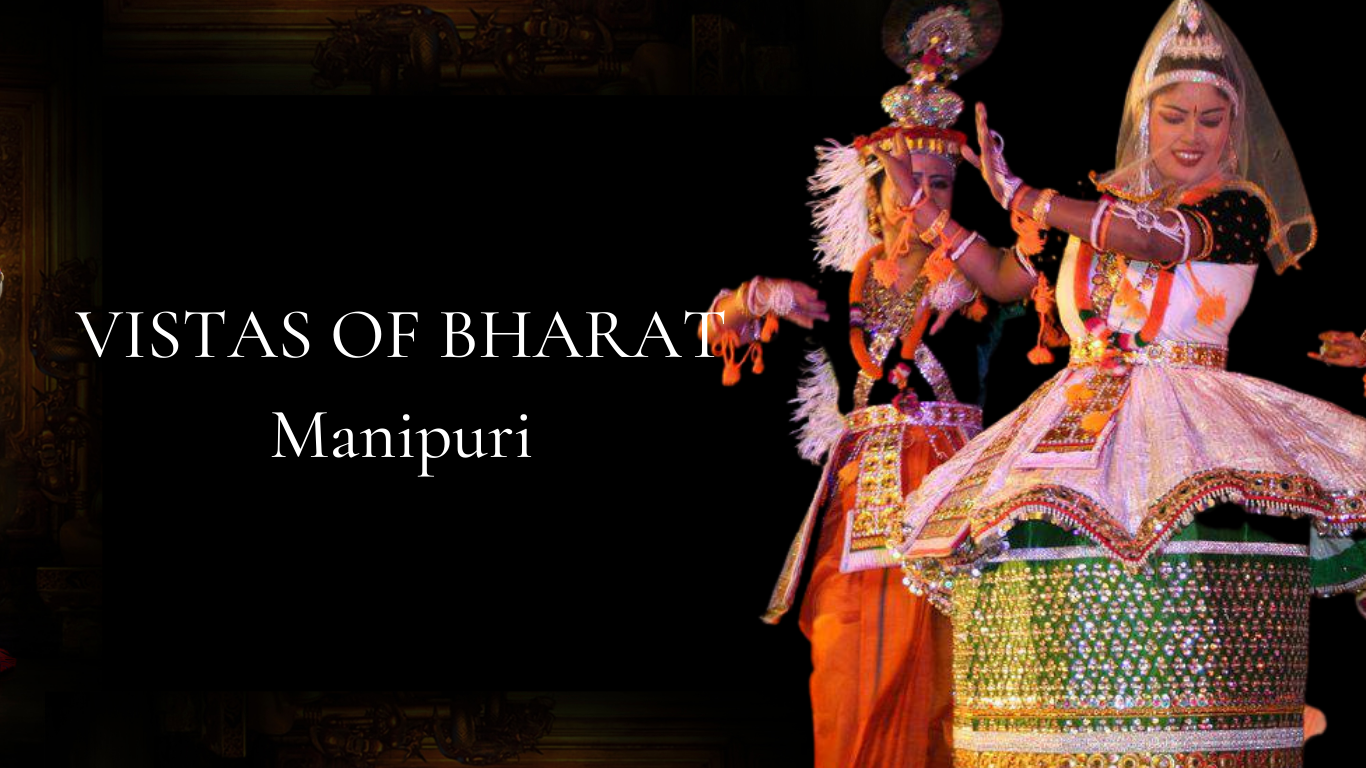

According to the mythological beliefs the native people of Manipur were called Gandharvas and they were efficient in this dance form. Although the epics Mahabharata and Ramayana mention about a dance tradition in Manipur it is believed the tradition cascaded to progeny verbally and the earliest reliable mentions of the dance form are found in the cultural texts of 18th century. It is also believed that the 18th century king Bhagyachandra dreamt of the idea of Rasleela dance form and structured the dance form which can be said to be a precursor to the Manipuri dance.
The geographical location of Manipur has kept it away from the susceptibility of foreign influence through invaders and maintains its idiosyncrasy which can be witnessed in the cultural dance form Manipuri which remains true to the Indian roots. The dance form focuses precisely on the dexterous hand and upper body movements.
There are two generic styles of Manipuri first, Tandava, capturing the themes of Shaktism and Shaivism and second, Lasya dedicated to Vaishnavism. In the Lasya style portrayal of Raslila or the love stories of Radha and Krishna is prevalent and Manipuri is basically known for this style. In the honor of the sylvan deity Umang Lai, the dance is performed in the Lai Haraoba festival.
It is known for its spectrum of movements ranging from delicate, sinuous and emotive feminine to aggressive masculine movements. The facial expressions aren’t exaggerated unlike in other classical dance-drama forms and sarvangabhinaya or the full body movement is the eccentricity of this dance form. The repertoire is structured according to the season in the Rasleela and the basic step being called Chali or Chari. There are five Ras, four of which are dedicated to each season and the fifth one can be performed anytime. Other styles include Thang-ta (inspired by martial arts), Sanskirtanas and choloms (masculine aspect).
The costumes are creatively unique and indigenous, a female being dressed in a traditional bridal dress called Potloi with a barrel shaped decorated skirt called Kumil and male is dressed in a dhoti. The tunes of high pitched classical Manipur music, Nat, with its trills and modulations accompany in reverberating the heartbeats of people. The instruments like Kartal, Pung, Pena and flute add to the effect.
Inspired by the beauty of Manipuri dance Rabindranath Tagore invited Guru Naba Kumar to teach Rasleela at Shantiniketan in 1926. Through our initiative Vistas of Bharat, it’s time to cast light upon the dimming flame Tagore illuminated.