

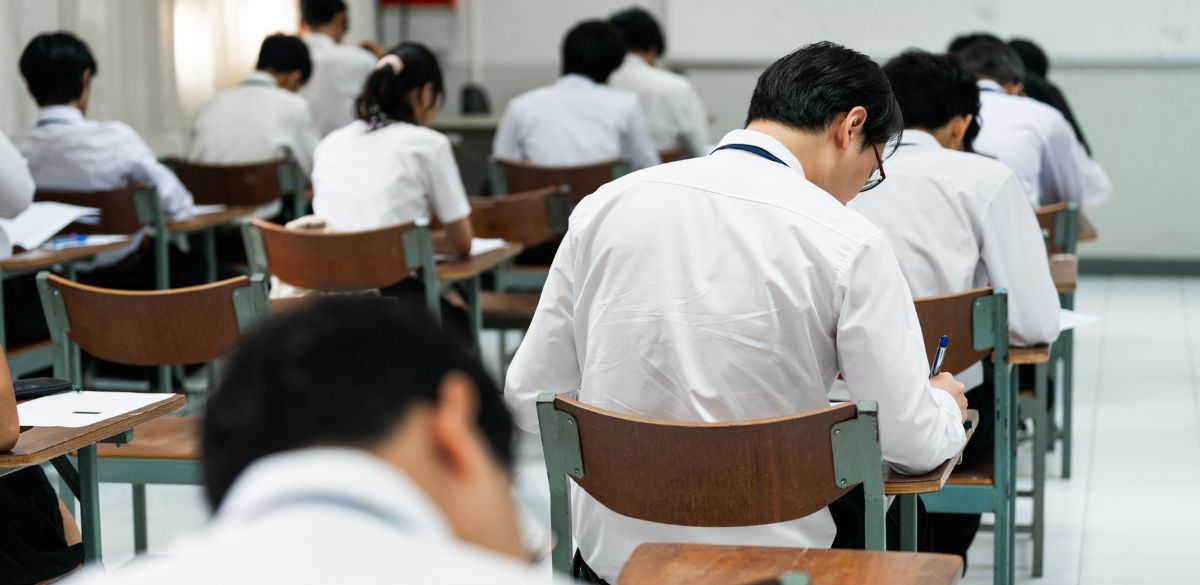
For a teenager in Class 9 the future can suddenly begin to feel frighteningly close.
Class 10 boards are approaching. Then come Class 11 and 12 entrance examinations college applications, competitive coaching and the constant question: “What are you going to do with your life?”
At an age when young people are still discovering who they are many Indian teenagers are already being asked to decide what they will become.
Increasingly the pressure is showing.
The years between Classes 9 and 12 are often described as the important years of school. For students however they can also become years of persistent stress, anxiety, self‑doubt and emotional exhaustion.

There is nothing about feeling nervous before an examination. Academic pressure can sometimes motivate students to prepare and perform. The concern begins when stress stops being temporary and starts becoming the background noise of life.
A teenager who once enjoyed playing football may stop going because there is “too much to study.”

Someone who loved drawing may begin feeling guilty whenever they do something that’s n’t academically productive.
A student may start waking up experiencing headaches or stomach discomfort struggling to sleep crying over relatively small setbacks becoming irritable with family losing interest in friends or hobbies or constantly feeling that they are not doing enough.
Sometimes their grades may still look perfectly fine.
The competition begins early
In India competitive examinations can shape the experience long before the examination itself arrives.

For students preparing for JEE, NEET, CUET and other competitive examinations Classes 11 and 12 can become dominated by coaching schedules, tests, rankings, cut‑offs and comparisons.
Before that Class 9 and 10 students may already hear conversations about streams, entrance examinations and career choices.
The message may not always be explicitly stated,. A teenager can easily internalise it:
Your marks determine your future.
And eventually:
Your marks determine your worth.
This is where academic pressure becomes psychologically complicated.
A 92 % can feel like failure because someone else scored 97 %.
A difficult mock test can feel like evidence that someone will never clear an entrance examination.
Coming second can feel like losing.
Making a mistake can begin to feel terrifying.
Social media adds another layer. Students are constantly exposed to study schedules, productivity videos, coaching advertisements, rank holders and curated stories of success.
The teenager isn’t simply studying anymore.
They are measuring themselves against everyone.
When stress becomes more than stress
Not every stressed teenager has depression or an anxiety disorder. It is important not to pathologise normal examination stress.
Persistent changes deserve attention.
A teenager may begin experiencing:
sadness, irritability or frequent crying
Excessive worry about exams, marks or the future
Difficulty sleeping or sleeping excessively
Loss of interest in hobbies and friendships
Changes in appetite or energy
Difficulty concentrating despite studying for hours
Frequent headaches, stomachaches or other physical complaints
Intense fear of failure
Feelings of worthlessness or hopelessness
Avoidance of school coaching or examinations
Repeated reassurance‑seeking about performance
Statements such, as “I can’t do this ” “I’m useless ” or “There is no point”
One sign alone does not establish a diagnosis. A pattern of persistent emotional, behavioural, cognitive or physical changes should not simply be dismissed as teenage drama.
“Everyone is studying. Why can’t you?”
Perhaps one of the damaging parts of academic pressure is comparison.
Parents may compare their child with classmates, cousins, siblings or neighbours. Teachers may compare ranks. Students compare themselves with toppers.
Often these comparisons come from concern.
Parents want their children to succeed. Teachers want students to reach their potential.
Teenagers may experience repeated comparison differently.
They may hear:
“You’re not good enough.”
Once that belief takes hold studying can shift from learning to proving ones worth.
This is especially concerning because adolescence already brings emotional, social and developmental changes.
Teenagers identity is still forming.
Failure during this time should be seen as an experience, not a definition.
Parents don’t have to remove expectations. They have to change the conversation.
Academic achievement and mental health do not have to be opposites.
Parents can keep expectations while making clear that love is not tied to marks.
Of asking only “How much did you score?” ask:
“How was the paper?”
Instead of immediately discussing mistakes:
“How are you feeling about it?”
Instead of:
“Your friend scored higher.”
Try:
“What do you think you need help with?”
Sometimes the most important sentence a teenager can hear is:
“One examination cannot decide what you are worth to me.”
Schools need to notice the student, not just the score
Teachers and schoolsre often among the first places where changes become visible.
A engaged student may suddenly withdraw.
A performing student may become terrified of making mistakes.
Someone who regularly participated may stop speaking
A student who appears “lazy” may actually be overwhelmed.
Mental‑health support in schools should therefore go beyond motivational talks. Students need confidential spaces where they can discuss academic stress, bullying, relationships, family expectations, identity and emotional difficulties.
Early support matters.
Teenagers should not have to reach a crisis before someone takes their distress seriously.
There is more than one definition of success
Perhaps the most important lesson we can give teenagers is that their future is larger than a single examination.
Not getting into a college does not erase someone’s abilities.
Changing streams does not mean failing.
Taking longer than others does not mean falling
Needing help does not mean being weak.
And being uncertain at 15, 16 17 or 18 is not a failure.
Teenagers are not examination results waiting to become adults.
Teenagers are people becoming people.
Teenagers curiosity matters.
Teenagers friendships matter.
Teenagers sleep matters.
Teenagers creativity matters.
Teenagers mental health matters.
Yes teenagers education matters too.
Education should help teenagers build a life, not make them afraid of having one.
So the time a teenager says, “I’m stressed “, perhaps we should pause before replying, “Everyone is stressed.”
Maybe ask:
“How much is this stress affecting you?”
Then actually listen to the answer.
Because sometimes the student who looks like a student simply needs to study may actually be the student who needs someone to remind them:
You are more than your marks.