
Interviews
Treading on the Rhythms of Her Own Tunes: Tyesha Kohli
A young, passionate solo artist, Tyesha Kohli knows how to strike the right notes with her impressive vocal range.
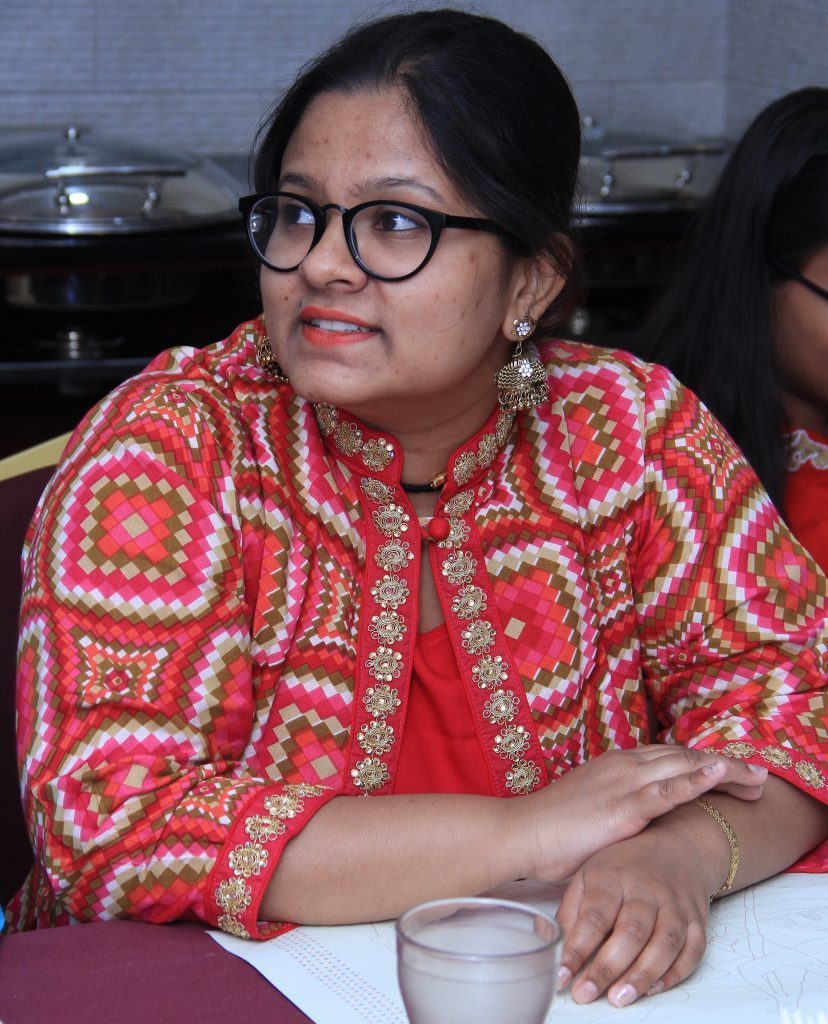

A young, passionate solo artist, Tyesha Kohli knows how to strike the right notes with her impressive vocal range. Her natural voice harmonises with the lush melody to create a musical piece that causes a stir in the audience. She owes her musical grounding to her mother, whom she vividly recalls as having sung many a beautiful song to her younger self.

A self-confessed cappella nerd, she is a musician, who enjoys listening and experimenting with a variety of styles. She began performing at small clubs professionally when she was still in college. One of her noteworthy performance has been the rendition of her original song titled “4:22 A.M.” in the second season of Artist Aloud Unplugged. Her song was simple, yet strangely reinstated a new perspective on the doldrums that stood in the way of building strong bonds with the inner self and the society at large. Her musical performance retained the charm and nostalgia in an equal measure.

In collaboration with Mojojojo, she features as the playback singer for “Sapne”, a soulful song that sheds light on the sheer determination of a lost soul to rage against the fetters of dying hope and emerge as a person who resolves to celebrate life in its entirety.
In her style and musical prowess, Tyesha Kohli is a rock-steady gem, determined to keep evolving as an artist and the Talented Indian wishes her good luck as she continues to progress in her musical journey.
Tête-à-tête with Tyesha Kohli

A quote that you live by: “Whatever is meant to be, will be”
Your style guru: My mom, for sure!
A superhero that you would love to be: The Flash, I am obsessed with it. And yes, it is not a conventional choice, but why be conventional at all?
A sport that you love to play: Haha, is obsessing over memes a sport yet?


Interviews
Dhir Jakharia: From Dreams to Wildlife Frames
Dive into the captivating world of wildlife through the lens of Dhir Jakharia, a 20-year-old wildlife photographer, as we unravel his dreams and adventures behind the lens.


In the heart of Kenya, amidst the whispers of the wild, begins a remarkable journey. Born in the small town of Nyeri, Dhir Jakharia, a 21-year-old, grew up immersed in the rhythms of African life. Raised in the vibrant tapestry of African culture until the age of 13, Dhir Jakharia eventually moved to the capital, Nairobi. It was here that his love for photography sparked, eclipsing his childhood dreams of becoming a footballer. And his journey as a wildlife photographer began.
Embracing Change: From Football Dreams to Photography
Dhir Jakharia’s journey had a surprising twist. From dreaming of a career in professional football to unexpectedly finding his passion in photography, life had its own plans for him. His transition from an aspiring footballer to a passionate wildlife photographer was fueled by curiosity and love for nature. “I kind of just fell in love with it,” Jakharia reflects, recounting his photography journey. “Now I’m doing wildlife specifically, and I love the travelling aspect of it.”
Dhir Jakharia: Exploring Passion and Purpose
Currently pursuing Business Administration, Dhir Jakharia seamlessly combines his entrepreneurial spirit with his love for nature. “I’m a Gujarati, so I have business in my blood,” he states. Specializing in marketing, he envisions a future where his entrepreneurial spirit and artistic vision converge seamlessly. “I want to mix my photography with business,” he shares. “I’m already doing it on a small scale, selling prints and organizing photo tours.”
Through his lens, he seeks to foster awareness and empathy for the natural world. “Good photography helps to create awareness and can promote animal conservation,” he explains. Working on the logic of making people more familiar with their environment to ensure they try to conserve it, he explains further how when someone sees a picture of an elephant and likes it, they may think twice before partaking in animal cruelty.
Dhir Jakharia: Overcoming Challenges
The young photographer’s journey has not been without its share of challenges. The untimely passing of his father in 2020, and the disruptions caused by the pandemic. “Dealing with these difficulties was as difficult as you can imagine,” he reflects. “But channelling that negative energy into something constructive, that’s the biggest achievement I’ve gained from photography.”
Dhir Jakharia: Inspirations, Dreams and Beyond
Despite the hurdles he’s faced, Dhir Jakharia remains steadfast in his pursuit of excellence. Drawing inspiration from renowned photographers in the field of wildlife photography, such as Thomas Vijayan, Varun Aditya and Shaaz Jung, he continues to hone his craft with unwavering determination.
“I learned everything through YouTube,” he shares, underscoring the importance of persistence and resourcefulness in his journey. “It’s more about making the most out of what you have.”
In a field dominated by seasoned professionals, Dhir Jakharia is exceptional. “In ten years, I see myself as a full-time photographer, recognized internationally,” he shares. “But beyond success, I prioritize my mental health and relationships with family and friends.” Reflecting on his recent exhibition at the ‘Xposure International Photography & Film Festival’ in Sharjah, UAE, he speaks of his pride in being the youngest among his peers. “Inspiring people and making photography my full-time profession while living a fulfilling life—that’s my definition of success,”. Additionally, he has already left a mark in the industry by collaborating with industry giants like Sony and Adobe at the young age of 18.
Message for Young Dreamers
To aspiring dreamers embarking on unconventional paths, Dhir Jakharia offers a simple yet profound piece of advice: “Self-belief is the biggest thing. Dream big, aim for the stars—even if you fail, you’ll still reach the sky.” In the footsteps of giants and guided by his unwavering passion, Dhir Jakharia continues to weave tales of wonder through his lens, reminding us all of the magic that awaits in the embrace of nature.
Interviews
Anant Ladha: A Man With A Mission
With a mission to spread financial literacy, finance creator Anant Ladha sits down with us for a quick chat on what drives him forward.


In this fast-paced world of technology, it’s hard to remain consistent. With changing algorithms and trends how can you remain consistent and relevant? And with everyday living prices going up daily, it’s hard to stick to your ethics. This is exactly when content creators like Anant Ladha with their YouTube channel Invest Aaj For Kal bring a refreshing change in this ever-changing system.
Anant Ladha: Early Days
Born and raised in Kota, Rajasthan, Anant Ladha’s introduction to finance and the stock market happened early in life. Being the third generation in his family to enter the financial world, he was exposed to trading and the stock market just like a kid would be exposed to cartoons. This gave a good foundation upon which he built up his entire life.
Starting as just a tactic to win over his teachers and peers, Anant Ladha originally began by keeping up with the ups and downs of the stock market to impress his teachers and friends. But whatever his intentions may be, this practice helped him a lot in his career as keeping up with the stock market became a regular part of his daily routine and helped him understand the nuances of the financial market better.
After initially starting his job at Mumbai in trading he left it to join his family business. While working there, an incident took place that changed his life forever. In his town, a company was closing down and all the employees were given around 50 lakhs corpus amount. Among them, one employee who had received this amount had invested it in an insurance scheme that wouldn’t allow him to withdraw the money until the five years were up. Desperately in need of money to support his sick wife in the hospital, the poor man showed up in tattered clothes begging Anant Ladha for money. His situation shocked Ladha and he realized that our country still is not as financially literate as he thought it was and hence he started on his mission to help convert India “from a country of savers to a country of investors.”
Invest Aaj For Kal
Starting as physical sessions, Ladha held free classes for people in certain parts of North India to help them become more financially literate. Two of his sessions were also recognised by the Rajasthan government. And everything was going fine but still, the huge financial literacy gap of the entire country was gaping widely at him. Hence, he decided to increase his target audience by going digital, leading to the inception of Invest Aaj For Kal.
Initially, for a good 1-1.5 years, his YouTube channel, Invest Aaj For Kal, didn’t do as well as he had expected. But consistent efforts, support from family and strong determination brought him to where he is today. With a little nudge from YouTube that put the spotlight on him by giving his channel the “Creator on the Rise” award in 2020, he was ready to make the most of his spotlight. From asking people to subscribe to his channel by talking about how great and informative it is without revealing that he owns the channel, to getting millions of views on every video, he has come a long way. The best part, Anant Ladha prioritises consistency over anything else and posts content regularly.
Message for Young Content Creators
Being the practical person that he is, he never blames fate or algorithms for fewer views but rather tries to find out how he can do better and revamp his content as and when required. He forever values the digital community that pushes him forward as he believes that the day he stops valuing them and takes them for granted will be the end of his career. For a man who went from working a 9-5 job to full-time content creator his definition of success changes every time he achieves something and this constant negotiation with success is the most practical way to view life.
Striking a balance between personal and professional life, Anant Ladha takes in bad comments like a pro. According to him, all his bad reviewers are truly his ardent followers as they wait to watch each of his videos just to leave bad reviews. And with this positive attitude, he leaves a message for young content creators:
“If earning money is the only objective you have through your digital journey then don’t enter this field. But if you’re objective is more than just earning money then it’s a beautiful field.”
His reasoning behind this lies in the fact that you won’t earn much in the initial years of creating content hence you must have a bigger purpose to sustain in this space for longer for yourself and your audience.
Interviews
Ganeshprasad Sridharan: Indian Education Redefined
Set to put a dent in the Indian education system, meet Ganeshprasad Sridharan; a man who left no stone unturned to right the wrongs that hindered his growth in the education system.

How often does our education system frustrate us? And more importantly how often do we set out to rectify it rather than fitting into the one-size-fits-all mould it prescribes to us? Our education system needs some serious re-designing and there’s no point hiding it any longer. We had a conversation with Ganeshprasad Sridharan; a man who left no stone unturned to right the wrongs that hindered his growth in the education system; to understand his side of efforts to bridge the gap that exists between the present and the future, i.e., learning and getting hired via Think School.
Ganeshprasad Sridharan: The Start of It All
Born and brought up in Pune, Ganeshprasad Sridharan’s schooling was pretty similar to others with just one difference; in his school, his teachers ensured to foster the students’ critical thinking ability. He was made to think about morality on an individual level rather than blindly following it as a societal norm. As the teachers asked him to re-examine Brutus’s character in the play Julius Caesar, he got a sense that there is no one right or one wrong in the world. He understood the value of subjectivity and cherished the individuality it brought with it.
Going from such an enriching environment to an engineering college which heavily relied on rote learning was a huge shocker for Sridharan. At college, neither was anybody willing to stop, think and understand the principles nor did the teachers wish to make them understand it. Plus the 75% mandatory attendance only adds to the pressure of fitting into the mould as students get less time to explore their interests and abilities. The constant assignments and exams with mediocre teaching that one was bound to attend set one up on a sure path of failure. The herd mentality which makes people follow along to crack the coveted UPSC which has a 0.2% pass percentage ensures that individuals are trapped in that conventional path of failure forever. To put a dent in the Indian education system and break this cycle of failure, Ganeshprasad Sridharan along with his partner Prakash Kothari came up with Think School.
Think School
With a motto, “To put a dent in the Indian education system by providing world-class education at a price that is less than a pair of denim jeans” Ganeshprasad Sridharan started Think School with his partner Prakash Kothari. With a rocky beginning that led to them shutting their physical classroom due to the pandemic, it was social media that not only saved but ensured that Think School thrived like never before.
Trying to bridge these three gaps; business education, communication and fundamental principles of entrepreneurship; by providing a masterclass on each, Think School has made the internet the one-stop destination to hone your business acumen. Realising that their audience can’t afford pricey offline classes, the move to social media such as YouTube was a great decision on the founders’ part.
Ensuring that the quality of Think School is never compromised they have a very detailed value system through which they select the core members of their team. Some of them as described by Sridharan include; the ability to critically analyse oneself, the ability to give brutal feedback, the ability to take in brutal feedback and lastly the attitude to constantly learn and improve.
According to Ganeshprasad Sridharan, it’s not “the breadth of influence” but rather the “depth of influence” that matters more. For him, Think School’s success lies in being considered a reliable source of information not just for students in IIM and other universities and schools but even for professors and established businessmen who rely on its practical and interesting approach to enhance their abilities.
What Makes A Great Entrepreneur?
According to Ganeshprasad Sridharan, it’s the extraordinary sharpness in finding better opportunities by doing market research, being able to read and address the gap presented by market research to understand your opportunity better, ability to execute one’s plan fast and daring to fail so that one learns the value of resilience over time, and lastly remaining relevant by evolving with technology and understanding the target audience and their needs; all of this makes the perfect recipe for a great entrepreneur. When Sridharan started his venture, many had their doubts regarding it but he trusted himself as according to him, he was following his heart as it had logic to it. Others could only project their doubts and hesitation but not provide a logic strong enough to persuade him to abandon his venture. And in today’s cut-throat world of business, this is truly a great virtue to harbour.
The masterclass at Think School ensures that one develops this business acumen through practical assignments in which the students are given full liberty to complete them how they feel like it. Following his grandfather’s advice to; “Use language not to confuse people but to convince them”, in each video of Think School, Ganeshprasad Sridharan and Prakash Kothari are building the pillars of modern education that values and foster individuality with one video and masterclass at a time.
Lastly, Ganeshprasad Sridharan’s message to all the budding entrepreneurs is:
“Keep learning and keep reading because market research will help you find opportunities and reading will help you tap into those opportunities. Passion alone will not take you anywhere unless you have a direction. Direction will come with two things: the ability to do market research to find problems and the ability to read and learn to address those problems better.”
Interviews
Rakesh Tiwari: A Poet Weaving the Fabric of Life
Celebrating Rakesh Tiwari and his work which is crafting life’s symphony through poetry and breaking barriers of elitism.


Poetry has always been a powerful medium, capable of touching the deepest chords of our hearts. It holds the magical power to not only articulate emotions but also entertain and deeply move us. Rakesh Tiwari, a multifaceted poet, author and storyteller, embarks on a mission to unwrap the intricate tapestry of life through his captivating poetic performances. His journey began with the simple act of rhyming, but he soon recognized the profound potential of his craft to create impactful poetry that could be performed and shared with the world.
His poetry mirrors life’s diverse and intricate flavours, each composition offering a distinct essence that resonates with a spectrum of audiences.
One of his well-known works is “Veg Biriyani” which playfully delves into the bond between vegetarians and beloved biriyani. His words advocate celebrating India’s diverse traditions, cultures and tastes while emphasizing the importance of respecting each other’s choices to foster unity.
Another well-known one is “Zindagi” which gives us a humorous take on the modern-day obsession with brands, exposure, internet culture, and social media. Tiwari highlights the superficiality of the current generation’s pursuits, where every moment is curated for online display, adorned with hashtags, and evaluated by the number of likes and comments.
Rakesh Twiari draws inspiration from a variety of sources, but it was the qawwali shows that his mother lovingly watched that plated the seeds of rhythm in him. His poetic journey began with exploring rhymes, which eventually became an artistry of words and emotions. It was the passing of his father that prompted him to pen down his first mature poem “ Mann Ka Mail”, a change from the usual love poems he penned in college.
Some of his more melancholic poetry is “Bachpan”, which serves as a heartfelt tribute to the innocence and carefreeness of childhood. Tiwari remembers his school days, scolding from his parents, and pure friendships that defined this phase of life.
“Amma Ki Atachi” tenderly reflects the emotional farewell to a mother. He pays homage to the cherished memories and ordinary things that held immense sentimental value. Tiwari’s poetry flows naturally from the depths of his feelings, being a potent medium for self-expression.
Rakesh Tiwari aspires to be a poet of the people, aiming to break down the barriers of elitism within the realm of art. His poetry has been a source of solace and companionship to many, with people expressing their gratitude for the solace and support they have found through his poetry. He encourages young artists to not shy away from the monotony that often accompanies life’s journey. Emphasizing the importance of perseverance and faith.
Though he has dedicated 11 years of his life working in a call centre, Rakesh’s unwavering belief was that his poetry would eventually pave the way for the realization of his dream-a life as a freelancer. His journey radiates the enduring power of faith and the unwavering pursuit of one’s passion. In the darkest tunnels of life, the light of hope always shines through, and Rakesh Tiwari’s story stands as a testament to this profound truth.
Interviews
Keerthika Govindhasamy: A Love for The Past in The Present
Hustling through life while keeping her love for history alive, recently we got the opportunity to have a chat with Keerthika Govindhasamy.

It is hard enough to make it out on the internet while coming from a privileged background. Just imagine how much harder it would be for someone coming from a not-so-privileged background. In the 5G era of ever-changing content, to be at the top of your game especially when you’re content deals with history is supremely hard. Yet there are a few historians and lovers of history who have made it pretty big on the internet for their credible content informing audiences worldwide about the side of history that’s not much talked about. Among them, one such well-known Indian history influencer on YouTube and Instagram is Keerthika Govindhasamy, popularly known as Keerthi History or keerthihistory. I recently had the opportunity to get to know her better and I am sure by the end of this interaction you’ll be as inspired as I was.
Keerthika Govindhasamy: Early Life & Upbringing
Coming from a humble background, in rural Tamil Nadu, life wasn’t always easy for Keerthika Govindhasamy. Although she is a well-known Indian history YouTuber and influencer on Instagram, it may come as a surprise that she wasn’t always the most studious student in her class. According to her, she may not be very studious but she was still the topper of her class. The reason behind this could be because her learning method was very different and more permanent than the traditional popular learning method adopted by many Indian students which is rote learning.
Rather than memorizing anything and everything presented in front of her, she prefers to understand the basic concept first as it helps her retain the new information for a longer time. Apart from this, she also prefers learning by remembering a text as a story and it was this learning method and love for stories that made her develop a strong affinity towards history.
Being raised in a conservative family like hers, she was denied many freedoms that the male members of her family enjoyed, such as pursuing a higher education degree like post-graduation. But unlike the rest of her family, her parents were a little more progressive and allowed her to go to college for her undergraduate degree. Yet life wasn’t always simple for Keerthika Govindhasamy as her parents wanted her to do a medical degree so that she could have an easy life over one in archaeology.
At that time in her local region, a lot of misconceptions prevailed around archaeology as a subject such as it is related to sex education. Plus the added fact that not many colleges offered it as a subject in Tamil Nadu also played a role in Keerthika Govindhasamy’s family strongly opposing it. But her love for the subject made her pursue a degree in history as it was as close to archaeology as she could get.
Keerthika Govindhasamy: The Influencer
Starting her journey on social media was not something that Keerthika Govindhasamy had initially planned. But after trying out many different career options and trying to see what fits right, somehow social media just clicked with her. She always had a knack for social media and mixed with her interest in history everything just fell in place. And as luck would have it when she started her journey on social media many people were showing interest in Indian history. But at the same time, many false information was also being spread. To ensure that other people also start appreciating her love for the subject more with accurate data, she started her YouTube channel Keerthi History her Instagram page keerthihistory and other social media pages on Facebook and Twitter.
Success didn’t come easy to her but when it did it came in tenfolds. After 7-8 months of consistent posting, one of her videos got viral and soon enough all of her videos started getting a lot of views. And overnight she gained thousands of followers. But regardless of how much success came her way she never let it get to her head as she is a strict believer in staying humble (and I can certainly vouch for it based on our interaction).
Naming Abhi and Niyu and Ranveer Allahbadia (BeerBiceps) as her inspiration she went on to explain how they reignited her spark for her first love, i.e., history. She adds that it was a particular podcast that Ranveer Allahbadia hosted with historian Anica Mann as his guest that truly charmed and motivated her.
As someone with as huge a following as hers, it’s only a matter of time before the dark side of the internet makes an appearance, i.e., hate and negative criticism. Govindhasamy shared how many of these haters have categorised her as a BJP supporter as she spreads knowledge on Indian history and part of it deals with Hinduism. When in reality all she wishes to do with creating her videos is to preserve a part of our culture. Her way to deal with all of them is to: Ignore and keep strutting forward.
A Message to Young Dreamers
As she tries to make her parents proud and provide for them by hustling every day, she imparts a small piece of advice for all the young dreamers out there; according to her, it’s going to be hard and not at all easy at the start, especially if you don’t come from a privileged background. You have got to work hard in the initial stages at the very least. Once you’ve built your brand you can hire more people and can take a small break. Do whatever you feel is right but be consistent and keep working hard and you will get there.


Satyajit Ray: Author And Filmmaker

From FOMO to JOMO

Lively Dance Compilation: International Dance Day

Parkinson’s Awareness Month

Brij Narayan: Mastering the Melody of Sarod

Social Conformity in Teenagers

5 Hidden Gems: Lesser Known Literary Gem of a Writer From India

Stress Awareness Month

Malota: A Filmfare Nominee Short Film

Henry Louis Vivian Derozio: Bengali Social Reformer

Twilight in Delhi by Ahmed Ali

The Stray Dogs Tales: Rescue For A Cause

Alcohol Use Disorder: Awareness and Affects on Mental Health

Valu: A Marathi Short Film Exposing Politicization of Sand

Throwback Thursday: Jyotirao Phule, The Indian Social Reformer Who Challenged The Caste System

Autism Acceptance Month: The Importance of Neurodiversity

Health Psychology: Nurturing Mind and Body

Reviewing Gunta: A Story of Dreams, Aspirations and Comfort

Remembering Manonmaniyam P. Sundaram

The Device- Digital Consumption in Children

Tips to Appreciate Writings that You Hate

Unveiling the Abstract Realms: Ram Kumar

Taking the First Step: A Guide to Starting Therapy

ADHD: A Much Needed Awareness

Carnatic Maestro: D. K. Pattammal

Dhir Jakharia: From Dreams to Wildlife Frames

World Down Syndrome Day: Cultivating Inclusive Communities

Short Film – AUTSIE | Autism spectrum disorder

Puppetry Art : Strings of Expression

International Day of Happiness: Understanding Happiness

All About The Zzz’s: Sleep and Mental Health

Male Indian Classical Dancers: Time To Break The Stigma

Keerthika Govindhasamy: A Love for The Past in The Present

Rakesh Tiwari: A Poet Weaving the Fabric of Life

Exploring Medieval Indian Temples and Their Reflection on Society

Art and Expression of Emotions in the Context of Mental Health

Crochet Artists to Save The Day!

Geeta Dutt: The Melody Queen of India

“All The Best” – Award Winning Short Film

Maya: A State of Trance Is A True Eye Opener

Clay Artists To Complete Your Pinterest Look

“BATTI” – Award Winning Short Film

“The Inheritance of Loss” by Kiran Desai

Not My Fault: It’s A Dress, Not A Yes

“The Covenant of Water” by Abraham Verghese

Throwback Thursday: E. Gayathri Veena, A Veena Vidushi

Young Instagram Poets To Feed Your Daily Mundane

Unveiling Draupadi’s Untold Saga: Yajnaseni Book Review

Aranmula Kannadi: Your True Reflection

Hilarious Stand-Up Shows for A Guaranteed Laughter

Chi Chi (Dirty): Turning a Blind Eye to Social Prejudices by Choice

Half Cake: Every Dream Matters

Clay Artists For That Perfect Insta Glam or Kawaii Charm

Adjusting the Lamp Called Life To Love Yourself A Little More

Ajeet Cour: A Writer and A Feminist Voice In Indian Literature

“Combat of Shadows” by Manohar Malgonkar

Throwback Thursday: Buddhadeb Bosu – Modernist Bengali Poet and Author

Ganeshprasad Sridharan: Indian Education Redefined

Rewinding the Beats : Remixes and Mashups of 2023

Raj Kapoor: The Revolutionary of Indian Cinema

Remembering Pradeep Kumar – The Iconic Actor of Indian Cinema

Vedam Venkataraya Sastry: A True Traditionalist

Throwback Thursday: Ramapada Chowdhury, The Voice of Bengali Literature

Kalanidhi Narayanan: Give Yourself A Second Chance

The Inspiring Journey Of Feeding India’s Ankit Kawatra

“The Untold” Words In A Love Story Of Two Best Friends

A Whistling Woods International Production: Doliyaan

Raat Baaki Baat Baaki with Jackie Shroff and Divyansh Pandit

Ehsaan Tera : Unplugged Cover by Ami Mishra Ft. Anchal Singh

Plus Minus: A Tribute To The Unsung Hero Major Harbhajan Singh

Mashaal : The Forgotten Soldiers By The Jokers’ Project Ft. Manisha Swarnkar

Safar : An Original Single by Bhuvan Bam Portraying Story of an Artist

The Red Typewriter : A Touching Love Story by Navaldeep Singh

‘Dilbaro’ From ‘Raazi Mellifluously Sung by Saloni Rai

‘Meri Maa’ : A Musical Short Film Ft. Tarannum & Abhinay

‘Meri Maa Ki Beti’ : A Poetic Portrayal by Niharika Mishra

‘Call Center Ke Call Boy Ki Kahani’ by Rakesh Tiwari

‘Jawaab’ : A Poetic Awakening by Kajender Srivastava

Tribute to Avicii By Indian Dancers Amit K Samania & Prakrati Kushwaha

From Failing in Engineering to Co-Founding a Million-Dollar Company : Varun Agarwal

Dum Dum Dumroo : Think Before You Judge

Manpreet Toor’s Magnificent Dance on “Laung Laachi” is Mesmerizing

Mashup of ‘Treat You Better’ & ‘Mann Bharrya’ in Melodious Voice of Semal and Bharti

Reminiscing Classics In Ankit Kholia’s Mellifluous Voice

Sang Hoon Tere : Bhuvan Bam’s Original Single

“Why be biased to complexions?” Aranya Johar Questions

Acoustic Version of Tere Mere Song by Dhvani Bhanushali

Tere Jaisa Yaar Kahan : A Tale of Two Best Friends

“Naino Se”: An Orginal Composition by Pushpendra Barman

14 Songs on 1 Beat Ft. Knox Artiste

Aranya Johar: A Voice for Change in India – ‘To India: With Love’

The Comic Genius: Rony Dasgupta from The Rawknee Show

A 14 Year Old’s Journey to Making Drones : Harshwardhan Zala

15 Songs in One Beat: Bollywood Mashup by Kshitiz Verma

Exclusive Rapid Fire With The Trio That Redefined Vines : RealShit

Making Sense Of The Age-Old Question of What Is Love?
-
 Editor's Pick3 weeks ago
Alcohol Use Disorder: Awareness and Affects on Mental Health
-
 Editor's Pick2 weeks ago
The Stray Dogs Tales: Rescue For A Cause
-
 Editor's Pick2 weeks ago
Henry Louis Vivian Derozio: Bengali Social Reformer
-
 Editor's Pick2 weeks ago
Twilight in Delhi by Ahmed Ali
-
 Editor's Pick2 weeks ago
Stress Awareness Month
-
 Short Films2 weeks ago
Malota: A Filmfare Nominee Short Film
-
 Editor's Pick1 week ago
5 Hidden Gems: Lesser Known Literary Gem of a Writer From India
-
 Editor's Pick1 week ago
Social Conformity in Teenagers