

“They raised their quills and pecked at the hands that touched their children. But they were helpless against the eagles that dived and stole their chicks”
Shahnaz Bashir
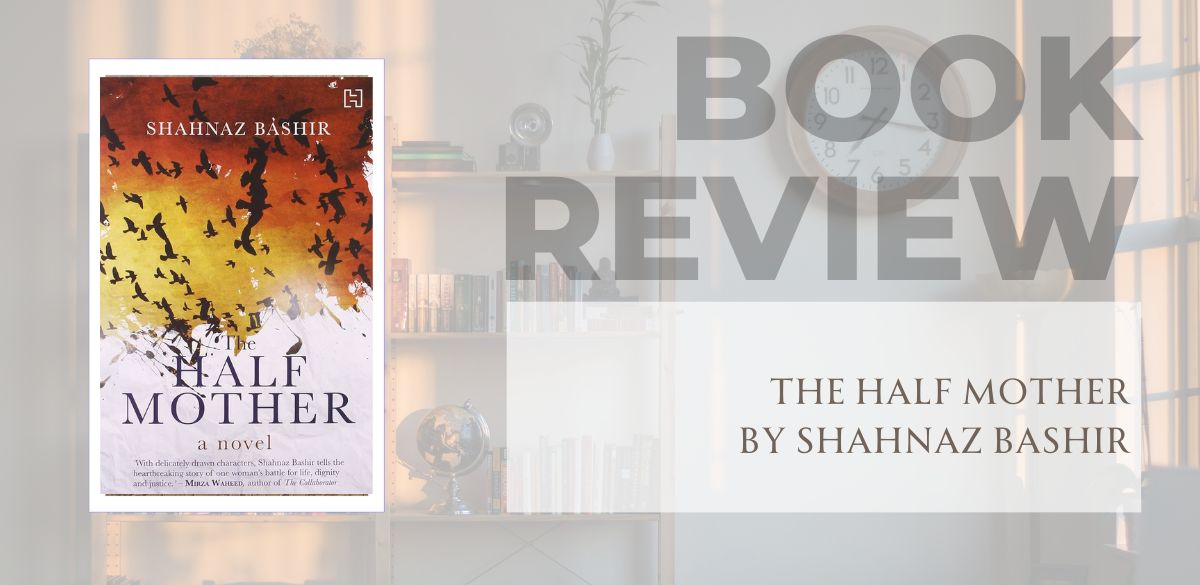
The Half Mother by Shahnaz Bashir, published in 2014, is a novel of Kashmir and its women. It is of the horrifying indignity the society has for women and the perpetual and mostly unsuccessful fight for justice. The Novel resonates with the theme: it is always women who suffer the most at the hands of multiple unjust power dynamics in vulnerable conditions.
A Closer Look
Set in the turbulent circumstances of the 1990s, Shahnaz Bashir’s debut novel, The Half Mother, epitomises the robbery of women’s natural lives via his character Haleema. It centres on the unannounced darkness that descends upon the common people. The narrative introduces us to Haleema and her despair upon losing her son, Imran Joo. The narrative soon takes us back to Imran’s childhood, the sheer innocence and loving family. However, Bashir does not miss out on a lingering shadow in the backdrop.
Eventually, we learn that Haleema first lost her husband to an unfaithful marriage. Later, she was forced to watch her father, Ab Jaan, killed. However, this utterly traumatic incident was not enough. Soon, Imran is abducted by the military men.
The story then takes forward describing the countless attempts to learn your son’s whereabouts, questioning if the son is even alive anymore, and attempting to seek justice, which is impossible to locate even in the largest cities.

The Half Mother: The Plight of Women and Quest For Identity
Shahnaz Bashir writes the narrative descriptively with perpetual gloominess engulfing day to day events of the characters. The narrative brings about innocent circumstances together with deeply immoral acts to question the very identity of this power. It is the hiding places of political fugitives and harbours of armed militants that one night before were children’s playgrounds and orchards that make the readers question the very existence of this power.
Bashir writes, “Whether their children were dead or alive or missing, mothers would remain mothers – but Advocate Farooq was not sure.” The question of identity clubbed with the autonomy of women is central to the novel. They not only died but their very existence was wiped off of any traceable location. It left women in eternal grief and a conflict with their own identity, that of a mother.

With vivid imagery and stark juxtapositions, Bashir challenges the readers to confront the complexities of power dynamics and the erosion of innocence.
Sticking to the theme of identity in the story, particularly the role of women as mothers in the face of unimaginable loss. The author captures the deep grief and existential turmoil experienced by Haleema and others like her as they struggle with the haunting spectre of uncertainty and longing.
The Take-Away
In all its essence, “The Half Mother” serves as a poignant testament to the human cost of conflict and the enduring resilience of those caught in its grip. Bashir’s debut novel invites readers to confront uncomfortable truths and engage with the complexities of identity, power and justice.