
Vistas of Bharat : Indian Culture
How Did Western Art and Culture Influence Indian Art: An Insight
From Madhubani to Warli, Indian Art is treasured. Here’s a glimpse of how it embraced Western Art and Culture.


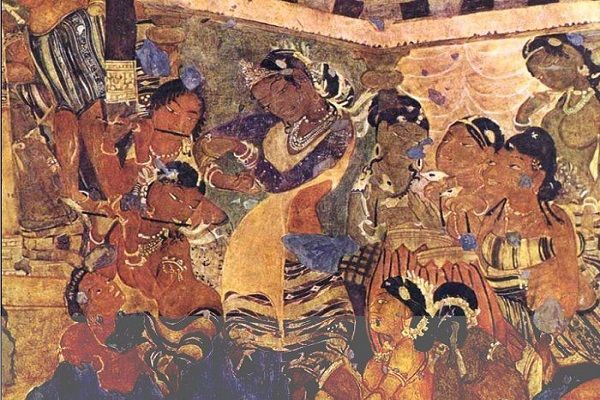
Indian art is a treasure. It is antique and fulfilling in an insanely different sense. It has been an integral aspect of India’s culture since ancient times. The oldest evidence of its significance of in our civilization dates back to as old as 30,000 years old. The Bhimbhetka cave paintings are a wonder in rock art in caves. The miniature paintings of India are one of the world’s most intricate and amazing art forms. Precisely, Art has been a proud thing for India since its inception. But with the onset of British rule in India, it was influenced by western culture. This effect created many masterpieces but also led certain forms to fade.

Indian Oil Paintings
The British brought with them not only their political, economic and social structures, but also their culture, values, and artistic traditions. This led to a gradual assimilation of Western ideas and aesthetics into Indian art, resulting in a unique blend of East and West. Many new techniques of painting emerged as a result of the same. The introduction of oil paintings is linked to the western culture. The oil painting technique gained popularity because it gave artists a new visual language to express themselves. They could not combine perspective, shading and depth into their pieces to create marvels.
Indian Sculptures
Sculptures have been in existence since the times of Indus Valley Civilization of 2500 to 1800 BCE. During that time generally small terracotta figurines were produced. But with the impact of western culture, sculpting developed. Sculptors started using new materials, methods and apparatuses to create larger sculptures. More intricate patterns could now be traced onto the statues. The combination of the East and the West traditions brought out a new wave of creativity.

Indian Architecture
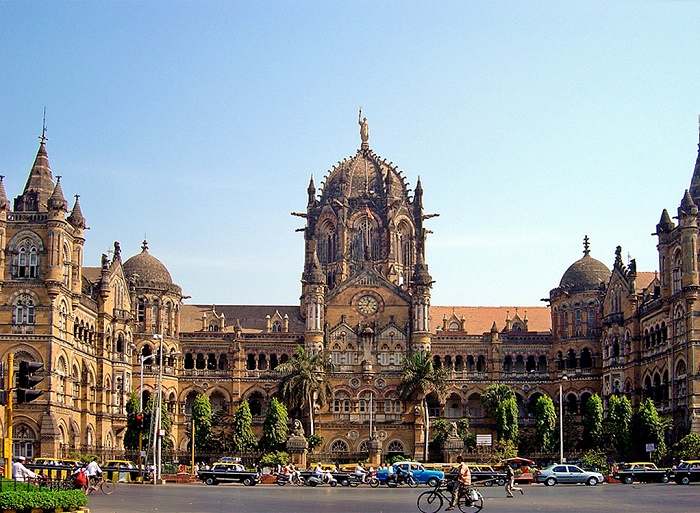
Architecture also witnessed the influence of Western culture. Many British architects were involved in designing and constructing buildings in India during the colonial period. This led to the fusion of Western and Indian architectural styles resulting in buildings with a unique blend of both. The British used a specific style in the architecture of their era in India. The basic structures were developed keeping in mind the Gothic and Neo-classical styles. And the British added Indian features and decoration enhancing the work.
Further Evolution
The impact of Western culture on Indian art is not limited to the colonial period alone. It continued to evolve and grow as India became more open to the world. In the 20th century, Indian artists began to experiment with new forms and styles of art, including abstract and pop art, and minimalism, which were influenced by Western movements. Also, Western culture impacted the spread and growth of Indian art in the world. It influenced how our art was perceived internationally. Indian artists have achieved global recognition and success by blending Western and Indian styles, resulting in works that are both visually captivating and culturally significant. This amalgamation has broadened the appeal of Indian art, leading to increased participation in cultural exchange programs, exhibitions, and collaborations between Indian and Western artists.
This cross-cultural fertilization has also enabled a better understanding and appreciation of each other’s cultures, enriching the artistic landscape. However, the assimilation of Western art and culture into Indian art has been controversial. Some artists and critics contend that it has resulted in the dilution of traditional Indian art forms and techniques. They maintain that Indian art should be firmly rooted in its own cultural and historical heritage, rather than being influenced by Western concepts.
Nonetheless, Western culture has also been influenced by Indian art in numerous ways, ranging from intricate designs to spiritual themes. One cannot ignore the vibrant colors and patterns of Indian textiles that continue to be cherished in the West. Despite the concerns about the loss of traditional forms, the assimilation of Western ideas has led to the evolution and diversification of Indian art, resulting in a new genre of art that is unique to India. The Western influence on Indian art has been significant and long-lasting, leading to the fusion of Eastern and Western styles. While there may be some reservations about the loss of traditional forms, the assimilation of Western ideas has propelled Indian art to new heights, making it more dynamic and diverse.


Vistas of Bharat : Indian Culture
Exploring The Golden Age of Tamil Literature: The Sangam Period
Sangam Literature is the oldest form extant Indian Literature. It shapes the rich Indian cultures and society present today.


The vast Indian literature marks Indian history. When we think about literature, what inherently comes to our attention is English and its various literary eras. In this bias, what we’ve left behind is the richness of Indian literature and its historical descent. This literature is the leading force of the evolved Indian society today.
Tamil, one of the oldest languages to exist today, has vast literature dating back to the 3rd century BC. The Sangam period spanned 600 years from the 3rd century BC to the 3rd century AD. Historians and scholars regard it as the golden period of Tamil literature.
Sangam Literature
Literally, “Sangam” means confluence. In Tamil literature, the term “Sangam” refers to a school of arts and letters. It was founded and patronized by Pandya, Chola and Chera, the three crowned monarchs of the Tamil land. The Pandyan monarchs, who had a deep appreciation for literature and the arts, specifically fostered this. Both history and Tamil traditions recognize The Pandyan capitals as the academy’s permanent home.
The Sangam academy was pivotal in defining the Tamil people’s literary environment throughout the Sangam period. The academy had a unique role as an educated community of literary critics. The critics mandated that any new literary work, regardless of the author’s social rank—prince or peasant— be subject to clearance before publication. The academy enforced stringent rules and guidelines, requiring every book to obtain approval before publication and ensuring that only highly regarded works received acknowledgment as authoritative. Due to this meticulous procedure, the academy was able to reject subpar works and instead provide the public with literary masterpieces of the greatest kind.
These writings which were considered the first examples of Dravidian literature, not only reflected the rich cultural diversity of the era but also laid the groundwork for the long history of Tamil literature. According to Tamil legends, the Sangam initially acquired members through co-option. However, thereafter, Lord Siva accomplished membership through a miraculous scheme.
The Three Sangams
Tamil tradition states that three Sangams, known as Muchchangam, joined together in ancient South India to mark the beginning of the Sangam period. According to the ancient stories presented in Iraiyanar Ahapporul, there were three Sangams that existed for an amazing 9990 years at different times, with participation from 8598 academics. The sage Agastyar is considered the literary tradition’s founder.
The Pandya capital hosted all three Sangams, with Old Madurai functioning as the first Sangam’s centre. A gathering of ancient sages and gods is said to have taken place in Old Madurai during the First Sangam. However, no works of literature from this Sangam survived.
Kapatapuram hosted the second Sangam. The only surviving work from this era that deals with Tamil grammar is Tolkappiyam. Unfortunately, both the first and second Sangams were drowned by seawater during repeated deluges.
There is a more material legacy of the third Sangam, which is located in present-day Madurai. Several Tamil literary works from this era have survived and are important resources for piecing together the Sangam era’s history. The Sangam poetry, the oldest collection of Tamil poetry to exist, is said to have started during the third Sangam.
Given the circumstances, it is more probable to determine the date of the third Sangam. According to scholars, it happened somewhere in the first two centuries of the Christian era—possibly even the century before. This period corresponds to both the trade with the Indo-Roman world and the modern Imperial Rome. Greek writers at the time offered proof of offshore commercial activity between the Mediterranean area and the Tamil peninsula. This is also documented in Sangam literature. Consequently, the third Sangam era saw the prolific production of a great number of works that are still in existence. This exhibited a literary and cultural shine amid a time that witnessed significant political and commercial exchanges.
Tolkappiyam: The Second Sangam
Tolkappiyar’s Tolkappiyam is the first known literary classic and a seminal work in Tamil literature. Tolkappiyam is mostly a work on Tamil grammar, but it also provides insightful information on the social and political climate of the period. The Royal Academy’s careful study of this highly regarded work serves to highlight its relevance. Adangodu Brahman was sent by King Nilandaru Tiruvira Pandya to evaluate the work, according to the introduction of Tolkappiyam. However, Tolkappiyar showed his expertise by emphasizing the significance and relevance of the works contained in the Tamil Sangam.
Literature In Verses: The Third Sangam
As we go into the present day, academics refer to the poetry included in the Ettutogai (eight collections), Pattupattu (ten songs), and Patinenkilkanakku (the eighteen minor works) as Sangam Literature. According to historians, these pieces date back to a time between 150 and 250 A.D. The poem’s duration served as a critical foundation for its categorization into three major categories. The lengths of the poems in the “Eight Collections” vary from three to thirty-one lines, and the poems in the “Ten Songs” range from 103 to 782 lines. The ‘Eighteen Minor Works’ comprise didactic and ethical literature, such as the well-known Tirukkural, which is mostly arranged in stanzas with two to five lines each.
The ‘Five Epics’—Jivakachintamani, Silappadikaram, Manimekalai, Valayapathi, and Kundalakesi—have an established place in Sangam literature. Sathanar and Ilango Adigal’s Silappadikaram and Manimekalai, are notably referred to as the “twin epics”. This is because they narrate the continuous story of Kovalan, Kannagi, and Madhavi. With an emphasis on Madurai, Puhar, Vanji, and Kanchi, Silappadikaram, a poem written by Ilango Adigal, and other poetry works depict the social, religious, political, and economic circumstances of Tamilakam. These literary works capture the spirit of the Sangam age and present Tamil history and culture.
Sangam Literature Vs. Sanskrit Literature Vs. Tamil Literature
Academics find the Sangam period controversial due to its historical significance, primarily because the dating of the Sangam works’ writing remains unclear. Establishing a consensus on the age of these works is a challenge since they are essential to understanding the Sangam era. Various scholars have presented opposing viewpoints.
While some suggest the influence of Sanskrit grammarians on Tolkappiyar, others contend that Tolkappiyam was influenced by Katantra, a Sanskrit grammar work written by Sharvavarman under the Satavahana dynasty. Due to the lack of conclusive proof, many scholars also suggest that the similarities between Katantra and Tolkappiyam may indicate mutual influences between Sangam and Sanskrit writers.
The term “Sangam” originates from the Tamil translation of the Sanskrit word “Sangha.” The term “Sangha” refers to any kind of organization or group that adheres to a shared interest, but the Tamil Sangam has a particular purpose. The religious connotation connected to Buddhism and Jaina Sanghas is completely different from Sanghata, a kind of poetical production by a single author on a certain selected theme.
The aim of the Tamil. Sangattamil, a unique compositional style distinguishes Sangam Literature from Tamil Literature. This style has its derivation, interpretation, and distinctive syntax, meter, and grammar. As a result, it is regarded as a classic.
Contemporary Relevance of Sangam Literature
There are 2279 poems in the present Sangam collections, ranging in length from 3 lines to over 800 lines. Some poets have contributed to certain works, like the Naladiyar, while a single author has written other works. 473 poets—about half of them women—wrote more than 30,000 lines of Sangam poetry, along with 102 anonymous authors. As an example of the Sangam period’s historical impact and cultural significance, the Sangams are comparable to contemporary European establishments. This includes the French Academy as they both share a dedication to upholding language purity and literary standards.
Vistas of Bharat : Indian Culture
Aranmula Kannadi: Your True Reflection
Discover the exquisite Aranmula Kannadi mirror, a rare handmade gem from Kerala, reflecting tradition, legends and the threat to the craft.


“Mirror, Mirror on the wall, who’s the fairest of them all?” A question asked by many. From the Evil Queen in Snow White & The Seven Dwarves to Poo in Kabhi Khushi Kabhi Gham to every one of us who check ourselves in front of the mirror before heading out, the mirror is an integral part of our life. According to Sylvia Plath, a glass mirror gives the most accurate reflection of one’s identity, but perhaps her famous poem Mirror would have gone slightly different had she known about Aranmula Kannadi, a mirror that reflects only the truth.
Aranmula Kannadi: Process
Passed down from generation to generation, this mirror is a rare gem from Kerala. “Aranmula” refers to the place this mirror originates from and “Kannadi” basically means “mirror” in Malayalam. Aranmula Kannadi stands out from its contemporaries because of the way it’s made. It’s a metal mirror that is entirely handmade from scratch. Typical glass mirrors reflect light through the back of the mirror leaving open possibilities for distortion while Aranmula Kannadi reflects light on the surface of the metal giving a rather accurate reflection. The tiny imperfections that you find on the mirror are never concealed but rather highlighted with pride as just like human fingerprints they are what makes each piece unique.
Made using a tedious process that includes melting the right amount of both tin and copper and pouring the metal alloy into clay moulds and then cutting and polishing it before finally attaching it to handles, it is truly one of a kind. Given the uniqueness of the article, the proportion used to make the metal alloy is never revealed to outsiders and has been kept in the family of certain artisans for generations. Considered a craft suited only for a man, Sudhammal J and many other modern women are trying to reverse this popular notion.
Aranmula Kannadi: Origin
With its origin being linked with the Aranmula Parthasarathy Temple, it is considered sacred by the people of the region. According to legends few artisans came to Aranmula from Sankaran Koil near Tirunelveli at the King’s order to help in building Aranmula Parthasarathy Temple. While working with different metals to help in the construction of the temple, the artisans by mistake discovered the reflective property when they mixed a certain amount of tin and copper together.
According to another tale, the high priest of Aranmula Parthasarathy Temple found the crown of the deity had cracked which urged the local King to order the Bronze Smith clan to make a new crown in just three days. The chief of the clan worried that they didn’t have enough material or time to get the project done on time. In his dream, the Goddess appeared and told him the exact proportions of tin and copper that needed to be used to make a metal shine like a glass.
Taking inspiration from his dream he told his wife to gather all the ladies in the village and ask them to bring their gold as they would sell it all to buy enough copper and tin to make the crown as ordained by the Goddess herself. And the result of it was the makudam of crown known as Kannadi Bhimbom an artistic marvel that was preserved in the temple till 1946.
Aranmula Kannadi: Significance
Though very expensive owing to the materials used and the manual labour expended, it is a popular gift item during weddings because of the auspicious connotation attached to it. The mirrors are considered one of the eight auspicious items or “ashtamangalyam” that are used in weddings during the bride’s entry. It is a first-surface mirror in which no gap exists between the object and the image, eliminating the possibilities of secondary reflections and aberrations commonly found in glass mirrors. The uniqueness and rarity of this mirror have made it an item worthy of receiving a GI (Geographical Indication) tag in 2004-05.
Aranmula Kannadi: A Dying Craft
Although it is one of a kind, the manual labour required to make even one Aranmula Kannadi is a lot and hence it discourages today’s generation from learning and keeping the craft alive. The constant flood and COVID-19 have only made the situation worse for Aranmula Kannadi artisans. As they hope and pray for their ancestral art to be kept alive, let’s do our part and spread the word about this rare gem from Kerala.
Vistas of Bharat : Indian Culture
Exploring Medieval Indian Temples and Their Reflection on Society
Medieval Indian Temples were developed as the reflection of the contemporary society. Let’s explore their architecture and cultural impact.

Medieval India holds a special place in Indian cultural history due to the extensive impact it had on society. This included architecture, literature, music, social engagements, etc. As for architecture, temples across the Indian subcontinent saw a massive change due to Bhakti. Initial simple rock-cut cave shrines gave way to vast, elaborate temples that spanned the Indian subcontinent and beyond as Hindu architecture developed over the ages. This design is now followed in contemporary Hindu temples all over the world.
When we look at the detailed intricate carvings and magnificent sculptures that adorn the medieval temples of India, a colourful tapestry of society unfolds before our eyes. These temples are visual storytellers that have captured the essence of the society that birthed them. Indian Temple Sculptures intertwine art, history and culture, calling us to delve deeper into their symbolic language. Let’s explore the impact medieval temples had on society and culture in India.
Indian Temple Structures
The Emergence of Indian Temple Sculptures
For us to truly understand and appreciate the societal reflections in Temple Sculptures, we have to first understand their historical evolution. The Gupta period which lasted from the 4th – 6th century CE marked the beginning of temple sculptures in India. During this time, spiritual devotion and artistic mastery came together, resulting in sculptures that radiate grace and divinity. Depictions of deities and celestial beings were the prime focus of the art of this time, which highlighted the religious and spiritual inclination of the Gupta society.
One can find such sculptures in the Dasavatara temple at Deogarh, Uttar Pradesh. It is the first North Indian temple to have a shikhara, though now part of it has disappeared and curtailed. Originally, people stated that the shikhara was around 40 feet. The temple depicts the ten avatars of Vishnu.

Transitional Phase
Spanning from the 6th to the 8th century, Indian Temple Sculptures witnessed a mix of fusion of local and foreign influences. The Pallavas and Chalukyas have marked their legacy not just through their glorious reign but also through their extraordinary art and architecture. The Pallavas, currently a part of Tamil Nadu, are considered the pioneers of Southern Indian Architecture, as they gave us the single rock temples in Mahabalipuram and Kanchipuram. The Chalukyas gave us the “Chalukyan Architecture ” or “Karnataka Dravida Architecture ”, in the form of the rock-cut temples of Pattadakal, a UNESCO World Heritage Site.

Their sculptures blended local elements with foreign influences which resulted in a unique visual language. They often were expressions of royal patronage and regional pride that showed the interconnectedness of art and power.
Such a stunning visual of that era can be found in Mahabalipuram, also known as Mamallapuram, in the Kancheepuram district of Tamil Nadu. The Chariot or Ratha Style temples there are a UNESCO site and are one of the oldest monolithic rock-cut structures. The Pallava kings constructed 5 of these marvels, each cut from a single stone. One of them is “Arjuna’s Penance” or “Decent of the Ganges” which is at a height of 96 feet and 43 feet long.

Mature Phase
During the reigns of the Cholas and the Hoysalas, from the 9th to the 13th century CE, the mature phase of the Indian Temple Sculptures unfolded. The Chola temple sculptures distinguish themselves through their grandeur and intricacy, presenting a rich canvas of mythological stories and religious symbolism. They were also the ones to pioneer the art of bronze sculptures, whose narrative style captured the viewers’ imagination. The Hoysala introduced distinctive decoration and intricate detailing in their sculptures which highlighted their artistic finesse.
One can witness a marvel created during this time at Modhera, Gujrat. The Sun Temple there, dating back to the early 11th century, was constructed by Raja Bhimdev I of the Solanki Dynasty. The massive rectangular stepped tank called the “Surya Kund” in front of this temple is the captivating aspect, where each year, at the time of the equinoxes, the sun shines directly into the “Surya Kund.”

Emergence of Bhakti and its Effects on Medieval Indian Temples
As the Bhakti movement had a great impact on Indian society, it also affected their ways of worship. People had replaced traditional and old Vedic gods with popular deities like Shiva, Vishnu, Krishna, Brahma and Devi. People made temples dedicated to each deity. These temples included various sculptures influenced by mythological happenings and adventures of their time. There were also specific places for activities such as devadasis dancing, performing various rituals and bathing.
The temples were considered the home of a particular god, and therefore, its maintenance held utmost importance. For this, priests looked after temples, ensuring their condition. The maintenance of temples was ensured by land offerings and contributions from the ruling elite because, as many temple inscriptions indicate, they were the centerpiece of a community.
History of The Architecture of Medieval Indian Temples
Indian temples saw a significant aesthetic and structural transformation during the medieval period, combining innovative architectural styles with symbolic religious symbols. This change is a direct result of early Buddhist buildings like stupas, which had a profound influence on the evolution of Hindu temples. In the Indian subcontinent, temples were originally carved out of ancient caves.
However, the introduction of Gupta architecture in the 4th or 5th century CE was the turning point. It was around this time that the first Hindu temples to stand alone developed. The Dashavatara temple in Deogarh, dedicated to Lord Vishnu, is a notable example of this era. Cave temples were important architectural and religious marvels during the Middle Ages. One such example is the Udaigiri cave temple in Malwa, which dates to the fifth century CE.

The temples were built around the garbhagriha, also known as the womb-chamber. This closed chamber, with no windows, held an emblem or picture of a particular god. The garbhagriha was thought by devotees to exude a strong energy that had an all-encompassing effect on the surrounding architectural features. The architecture of the temple often featured blind entrances on three sides to represent this flow of divine energy, letting the deity’s power expand symbolically.
The garbhagriha was the main element of the early temples. But by the 10th century CE, new architectural features like the sikhara, mandapa, and ardhamandapa had been added. The temples were changed and given a more intricate structure by these modifications. Many temples look like silhouettes of mountains from a distance, especially when seen from above because of their many towers. Notable examples of these temple constructions are the 11th-century Kandariya Mahadeva temple in Khajuraho and the 12th-century Rajarani temple in Bhubaneswar.
Temple architecture evolved regionally, as seen by the various features of temples in Orissa, Kashmir, and Bengal. Nevertheless, people widely acknowledge the Nagara and Dravida architectural styles as the two main architectural forms.
What Do Medieval Indian Temples Depict?
Depiction of Society in Temple Sculptures
Temple sculptures give us a visual representation of the socio-political hierarchies in medieval Indian Society.Royalties wear regal attire and strike sophisticated poses that symbolize their authority. The courtiers and nobility assume poses that demonstrate their homage or assistance to the royalties.
The clothes worn by them further depict the hierarchies. The ruling class adorned themselves with elaborate clothing and heavily detailed jewelry that set them apart from the rest of society. With close examination of these sculptures, we gain insights into the divisions of power, privilege, and status that shaped medieval Indian society. We get a visual understanding of social fabrics and hierarchies that were present at that time.
Representation of Daily Life
Temple sculptures give us a look into the routine and occupations of people during medieval India. Artisans, farmers, traders, and other members of society actively engage in their roles and responsibilities to the community. These sculptures capture not only the aspects of daily life but also the essence of the norms, gender roles, and cultural practices. From depictions of agricultural labour to busy bazaars, the sculptures bring to life the everyday existence of medieval India.
Religious and Mythological Narratives
Temple sculptures are storytellers, presenting religious and mythological stories in a physical form. They depict gods, goddesses, and epic tales from Hindu mythology, giving us a visual representation of the cultural and spiritual traditions of medieval India. Sculpture panels show us the stories of creation, the war between gods and demons, and the victory of good over evil. These stories convey morals, ethics, and philosophical aspects, providing us with lessons and inspiring devotion. These sculptures are not only objects of worship but also powerful conduits for spiritual enlightenment and cultural preservation.
Social and Political Commentary in Sculptural Narratives
Going beyond just religious and mythological stories, Temple sculptures give us a glimpse of social and political commentary. They tell us stories from historical events, legends, and power dynamics. Sculptures show us war, conquests, and political alliances, showing us the bravery of warriors and the ambitions of rulers. They show us the patronage of art by kings, spotlighting their authority and cultural influences. In addition, these sculptures highlight religious and cultural practices such as pilgrimage sites, rituals, and ceremonies. Sculptures further illustrate the diversity of regional customs and distinct traditions and rituals.
Impact of Medieval Indian Temples on Society
In earlier times, temples were more than simply a place of worship. Education was fundamentally religious, and temples had the primary role in it. People went to temples to learn religious and moral teachings about society and life. They also learnt dance, music, other fine arts and social behaviors at temples. As these temples were central to society’s functioning and sheltered students and scholars, they also acted as a place for the needy. These temples had enormous wealth and it was used to help the society’s betterment in all aspects. As times changed, temples also started garnering medical facilities to help the sick. It also acted as a court of law as people started discussing concerns and conflicts in this central space.
Eventually, a feudal system became attached to the temples. People began to consider temples the home of their particular deity and started giving their financial offerings and other resources to God instead of the priest. The king of the particular area claimed these offerings, and even the society considered him entitled to this. While Brahmans had their exclusive advantages, they did not appreciate this shift and held deep opposition against this system. However, due to the pressure of kings and local people, the system prevailed.
Conclusion
As we end our journey through the corridors of time, we must appreciate and preserve these cultural treasures. Medieval Indian temples witnessed a considerable architectural shift, becoming hubs for social services, education and culture. As a reflection of shifting social and religious forces, they were crucial in forming Indian society and culture. Temples developed from simple rock-cut caves to elaborate buildings. Their impact went beyond religious practices to include the arts, education, social services and even the legal system. This historical heritage, which still has an impact on modern India, exemplifies the complex interplay of medieval culture, architecture and religion.
The legacy of medieval Indian Temple sculptures continues to inspire and captivate. When we delve into their beauty and deep symbolism, we create a deeper connection to our heritage and get an understanding of the vibrant tapestry that is Indian society. It gives us a larger picture of the complexities of Indian society and the forces that have shaped it over the course of time and influenced by various reigns and dynasties.
Vistas of Bharat : Indian Culture
Indian Textile Prints to Jazz Up Your Wardrobe
Indian textile prints are as varied as they can be, both because of designs and the different techniques that they employ.

There are three very visible markers of any place that defines it. First is language, second is their clothes and third is their food. Among these three, it’s clothes that are most easily adopted by people from different cultures as they often add more vibrancy and life to one’s look without giving their taste buds the sometimes unpleasant aftertaste or their brain a numbing pain from remembering the word structure and formation in another language. In India, cloth has been a symbol of freedom and resistance since colonial times and today it stands the testament of time and is the face of our national heritage. The different handloom technique that is used is one way to distinguish the different textiles in India. The different prints and printing technique is also a major distinguishing element. Let’s take a look at some of the most popular Indian textile prints:
Ikkat
Popular in Odisha, Gujrat and Andhra Pradesh, this print is surely an acquired taste. Made by tying and dyeing sections of the yarn before weaving the fabric which leads to the iconic blurring effect. The symmetry and beauty of this print are bound to leave you spellbound. It is common to find motifs of flowers and animals like fish, parrots, etc. in this design.

Bandhani
Started by the Khatri community of Gujarat, it is known for its different dot-sized prints on a colourful backdrop. Created using a tie-dye technique wherein the cloth is tied in several tight small knots with a sealed thread and then dyed. If you’re a lover of bright colours this print is for you.

Dabu
Another popular print from Western India, Dabu follows a hand-block printing technique. In this a mud-resisting agent primarily made up of calcium hydroxide or chuna, naturally pounded wheat chaff (beedan) and gum (gond) is used to apply it on the fabric before and during an indigo bath. After the indigo bath, the cloth is washed to remove the mud and it leaves behind the beautiful motifs of flowers and plants. Getting its name from ‘dabana’ meaning ‘to press’, this technique creates beautiful patterns that have re-emerged as a trendy pattern in the fashion scene today.

Batik
Using a wax resistance dying technique Batik is a very intricate design technique which involves covering certain areas of clothing with bits of wax and then dyeing the cloth. This leads to the formation of patterns in those areas where the bits of wax were originally laid. This creates an intricate and repetitive pattern consisting of motifs which may be floral or ornamental.

Ajrakh
Very popular in Sindh, Pakistan; Kutch, Gujarat; and Barmer, Rajasthan in India, Ajrakh follows a hand-block printing technique that gives it its rich and vibrant look. Using only natural dyes design stamps are created which are then applied to a piece of clothing to create the design. The print usually uses indigo or deep red colours and white or black outlines to define the design. It consists of symmetrical geometric elements that give it its intricate look.

Kalamkari
Heavily inspired by Hindu mythology, and using motifs from Ramayana and Mahabharata it uses block or hand printing to achieve the famous intricate design. Kalamkari literally means “pen art”. In earlier days poets and singers used to paint Hindu mythology characters and their tales which ultimately led to the generation of textile printing Kalamkari.

Leheriya
Leheriya is another traditional tie-dye technique that hails from Rajasthan. It is a rather simple technique that uses resist-dyeing to create the signature flickering wave-like patterns. In Rajasthan, waves are called “Leheriya”, and hence the technique is named after the pattern it creates. Printed on bright-coloured fabric, this print will surely add colourful zest to your wardrobe.

These are just a few prints among the array of prints that give Indian textiles their unique flair!
Vistas of Bharat : Indian Culture
Unraveling Bhakti Literature: An Immersive Exploration into its Saints and Cultural Imprint
Bhakti Literature was one of the most significant movements in Indian Literature. Discover more about its cultural impact in this article.

“Awake, arise, or be forever fallen.”
John Milton, Paradise Lost
Modern days of the 21st century continually draw us towards the liberating ideologies that span the globe. However, in this fervor, we fail to acknowledge that we need not traverse vast distances to recognize that India’s Bhakti Movement and the various European anti-feudal movements may have shared their underlying ideas. That is the richness of our history.
Movements are born from reforms or rebellions. These may stem from changing socio-cultural landscapes or mental atmospheres about the prevailing social systems. The Bhakti Movement was one such movement. It arose from the advent of nationalism, as the scholars claim, against the heavily feudal social orders.
While the first wave of Bhakti as a concept dates back to the 7th century, it was only in the 12th century that it started evolving as a widespread cultural movement. As Balkrishna Bhatt referred to the Bhakti Literature as “the evolution of people’s sensibilities”, the medieval Indian masses witnessed a heightened awareness. This was in the forms of emotions, concerns and socio-economic position. This awareness gave rise to democratic cultural practices, much like the Renaissance in the European subcontinent.
Rejection of Feudalism: Folk Culture, Democratized Literature and Unification of Knowledge in Bhakti Literature
During the Sultanate period, Indian society was crammed with several aberrations, such as the caste system, rituals, polytheism, chaturvarna, etc. Therefore, Brahmanical dominance prevailed more than ever. It was during this time that many famous Bhakti saints like Kabir, Surdas and Mirabai wandered from place to place, singing hymns and drawing upon common people. These vernacular Bhakti saints, who were ideologically anti-Brahmanical, placed much importance on faith in divinity. This faith was free of prejudice against castes, regions, genders and religions. This spirit lay in the awareness spread by the Muslim invaders with the introduction of a more egalitarian religion, Islam. Alongside, they rejected aristocratic poetry and court languages – Sanskrit, Pali, Prakrit and Apabhramsha and produced literature in regional languages.
This form of rebellion against anti-human feudal orders was seen in the Bhakti movement for the first time. Moreover, it was not only the forms of court poetry that the Bhakti saints rejected. Primarily, it was their content that sprang from the experiences of common people and developed in folk culture and literature. This also bridged the artificial gap between literariness associated with traditional poetic language and spoken language for the first time in Indian history. As a counter-cultural movement, Bhakti had a lasting impact on literature, fine arts, and music altogether. At the same, it also unified the masses on a pan-Indian level, opposing the social issues of caste and gender.
As the Bhakti movement actively questioned and rebelled against the orthodox Brahmanical society, it beckoned people from lower castes and women to partake in the movement. This provided them with aspirations of gaining salvation regardless of their religion via devotion to the divine instead of reliance on exclusive Brahmanical knowledge.
Saint Poets of The Medieval Bhakti Movement
Ramanuja, an influential figure in the Bhakti movement, emphasized the idea of devotion as a pathway to spiritual liberation. Similar to other Bhakti saints, he criticized and rejected the idea of the inaccessibility of spiritual liberation for the lower castes. Instead, he actively engaged folks from all social backgrounds. Furthermore, his commentaries on important Hindu scriptures, such as the Bhagavad Gita, provided knowledge to the lower sections of society, which violated the essential ideologies of Hinduism.
The aspects of rebellion and resistance have an immense place in the poetry of Surdas and Tulsidas. They immensely used the traditional Sanskrit elements as tools to create their Bhakti poems. These poems were often centered around courageous heroes rebelling against exploitative and unjust forces. This highlighted the then-current socio-cultural and economic landscapes. Moreover, their heroes often killed the tyrannical figures in order to establish benevolent socio-political orders. It was these underlying ideologies that aggravated the aristocrats and invited resistance of Bhakti from their courts.
Sant Kabir, born in the 15th century, was yet another saint poet of medieval Bhakti movements. He emphasized the importance of inner divinity and humanism over outward piety, which is false in its actual essence. It denounced the hypocrisy of the aristocrats and authority figures and accentuated the anti-humanist emotions behind social violence.
Mirabai, often considered a symbol of Bhakti poetry, popularized devotional literature in vernacular languages. She made spiritual themes accessible to the masses, which aristocrats again looked down upon. More importantly, her devotion defied the rigid gender and social norms attached to her as a Rajput woman. Her poetry also contained many elements of Sufism, which again targeted the religious beliefs of the time.
It is almost surprising how both the ancient and the medieval Bhakti movements were established in vastly different societies, contemporary politics, religious beliefs, masses across the Indian subcontinent, etc., and yet shared the underlying essence. What is equally astonishing is that it remains a striving utopia even today, in the 21st century. The socio-political affairs, massively advanced and reformed, lack the egalitarianism that Sant Kabir adopted as inner divinity in the 15th century and women’s liberation still remains a quest as they hide their innermost desired achievements in secrecy behind the guise of gopis.


Parkinson’s Awareness Month

Brij Narayan: Mastering the Melody of Sarod

Social Conformity in Teenagers

5 Hidden Gems: Lesser Known Literary Gem of a Writer From India

Stress Awareness Month

Malota: A Filmfare Nominee Short Film

Henry Louis Vivian Derozio: Bengali Social Reformer

Twilight in Delhi by Ahmed Ali

The Stray Dogs Tales: Rescue For A Cause

Alcohol Use Disorder: Awareness and Affects on Mental Health

Valu: A Marathi Short Film Exposing Politicization of Sand

Throwback Thursday: Jyotirao Phule, The Indian Social Reformer Who Challenged The Caste System

Autism Acceptance Month: The Importance of Neurodiversity

Health Psychology: Nurturing Mind and Body

Reviewing Gunta: A Story of Dreams, Aspirations and Comfort

Remembering Manonmaniyam P. Sundaram

The Device- Digital Consumption in Children

Tips to Appreciate Writings that You Hate

Unveiling the Abstract Realms: Ram Kumar

Taking the First Step: A Guide to Starting Therapy

ADHD: A Much Needed Awareness

Carnatic Maestro: D. K. Pattammal

Dhir Jakharia: From Dreams to Wildlife Frames

World Down Syndrome Day: Cultivating Inclusive Communities

Short Film – AUTSIE | Autism spectrum disorder

Puppetry Art : Strings of Expression

International Day of Happiness: Understanding Happiness

All About The Zzz’s: Sleep and Mental Health

Male Indian Classical Dancers: Time To Break The Stigma

Toxic Work Culture: The Sad Reality We All Live In

Chaara: Human Relationship With Food

Farida Jalal: In The Realm of Cinema, Some Stars Never Fade

Keerthika Govindhasamy: A Love for The Past in The Present

Rakesh Tiwari: A Poet Weaving the Fabric of Life

Exploring Medieval Indian Temples and Their Reflection on Society

Remembering Krishna Nehru Hutheesing: A Legacy

Art and Expression of Emotions in the Context of Mental Health

Crochet Artists to Save The Day!

Geeta Dutt: The Melody Queen of India

“All The Best” – Award Winning Short Film

Maya: A State of Trance Is A True Eye Opener

Clay Artists To Complete Your Pinterest Look

“BATTI” – Award Winning Short Film

“The Inheritance of Loss” by Kiran Desai

Not My Fault: It’s A Dress, Not A Yes

“The Covenant of Water” by Abraham Verghese

Throwback Thursday: E. Gayathri Veena, A Veena Vidushi

Young Instagram Poets To Feed Your Daily Mundane

Unveiling Draupadi’s Untold Saga: Yajnaseni Book Review

Hilarious Stand-Up Shows for A Guaranteed Laughter

Aranmula Kannadi: Your True Reflection

Delhi After 2 Am: A Harsh Reality

Chi Chi (Dirty): Turning a Blind Eye to Social Prejudices by Choice

‘The Vendor of Sweets’ – A Sweet Treat of Self Discovery

Clay Artists For That Perfect Insta Glam or Kawaii Charm

Half Cake: Every Dream Matters

Ajeet Cour: A Writer and A Feminist Voice In Indian Literature

Adjusting the Lamp Called Life To Love Yourself A Little More

“Combat of Shadows” by Manohar Malgonkar

Throwback Thursday: Buddhadeb Bosu – Modernist Bengali Poet and Author

Rewinding the Beats : Remixes and Mashups of 2023

Ganeshprasad Sridharan: Indian Education Redefined

Raj Kapoor: The Revolutionary of Indian Cinema

Remembering Pradeep Kumar – The Iconic Actor of Indian Cinema

The Inspiring Journey Of Feeding India’s Ankit Kawatra

“The Untold” Words In A Love Story Of Two Best Friends

A Whistling Woods International Production: Doliyaan

Raat Baaki Baat Baaki with Jackie Shroff and Divyansh Pandit

Ehsaan Tera : Unplugged Cover by Ami Mishra Ft. Anchal Singh

Plus Minus: A Tribute To The Unsung Hero Major Harbhajan Singh

Mashaal : The Forgotten Soldiers By The Jokers’ Project Ft. Manisha Swarnkar

Safar : An Original Single by Bhuvan Bam Portraying Story of an Artist

The Red Typewriter : A Touching Love Story by Navaldeep Singh

‘Dilbaro’ From ‘Raazi Mellifluously Sung by Saloni Rai

‘Meri Maa’ : A Musical Short Film Ft. Tarannum & Abhinay

‘Meri Maa Ki Beti’ : A Poetic Portrayal by Niharika Mishra

‘Call Center Ke Call Boy Ki Kahani’ by Rakesh Tiwari

‘Jawaab’ : A Poetic Awakening by Kajender Srivastava

Tribute to Avicii By Indian Dancers Amit K Samania & Prakrati Kushwaha

From Failing in Engineering to Co-Founding a Million-Dollar Company : Varun Agarwal

Dum Dum Dumroo : Think Before You Judge

Manpreet Toor’s Magnificent Dance on “Laung Laachi” is Mesmerizing

Mashup of ‘Treat You Better’ & ‘Mann Bharrya’ in Melodious Voice of Semal and Bharti

Reminiscing Classics In Ankit Kholia’s Mellifluous Voice

Sang Hoon Tere : Bhuvan Bam’s Original Single

“Why be biased to complexions?” Aranya Johar Questions the Society

Acoustic Version of Tere Mere Song by Dhvani Bhanushali

Tere Jaisa Yaar Kahan : A Tale of Two Best Friends

“Naino Se”: An Orginal Composition by Pushpendra Barman

‘Tere Mere’ Female Cover by a Young Singer from Haryana, Saloni Rai

Don’t Judge People on Skin Colour, Every Skin Glows : Sejal Kumar

14 Songs on 1 Beat Ft. Knox Artiste

Aranya Johar: A Voice for Change in India – ‘To India: With Love’

The Comic Genius: Rony Dasgupta from The Rawknee Show

A 14 Year Old’s Journey to Making Drones : Harshwardhan Zala

15 Songs in One Beat: Bollywood Mashup by Kshitiz Verma
-
 Editor's Pick3 weeks ago
Autism Acceptance Month: The Importance of Neurodiversity
-
 Short Films2 weeks ago
Valu: A Marathi Short Film Exposing Politicization of Sand
-
 Editor's Pick3 weeks ago
Throwback Thursday: Jyotirao Phule, The Indian Social Reformer Who Challenged The Caste System
-
 Editor's Pick2 weeks ago
Alcohol Use Disorder: Awareness and Affects on Mental Health
-
 Editor's Pick2 weeks ago
The Stray Dogs Tales: Rescue For A Cause
-
 Editor's Pick2 weeks ago
Twilight in Delhi by Ahmed Ali
-
 Editor's Pick2 weeks ago
Henry Louis Vivian Derozio: Bengali Social Reformer
-
 Editor's Pick1 week ago
Stress Awareness Month